Friday, 3 February 2023

Ajmer Sharif

Location
Ajmer Sharif Dargah is 2 kilometres (1.2 mi) away from the main central Ajmer Railway station and 500 metres away from the Central Jail and is situated at the foot of the Taragarh hill.
Background
Main article: Mu'in al-Din Chishti
Moinuddin Chishti was a 13th-century Sufi saint and philosopher. Born in Sanjar (of modern-day Iran), or in Sijistan, he arrived in Delhi during the reign of the Sultan Iltutmish (d. 1236). Moinuddin moved from Delhi to Ajmer shortly thereafter, at which point he became increasingly influenced by the writings of the famous Sunni Hanbali scholar and mystic ʿAbdallāh Anṣārī (d. 1088), whose famous work on the lives of the early Islamic saints, the Ṭabāqāt al-ṣūfiyya, may have played a role in shaping Moinuddin's worldview. It was during his time in Ajmer that Moinuiddin acquired the reputation of being a charismatic and compassionate spiritual preacher and teacher; and biographical accounts of his life written after his death report that he received the gifts of many "spiritual marvels (karāmāt), such as miraculous travel, clairvoyance, and visions of angels" in these years of his life.
History 
Moinuddin seems to have been unanimously regarded as a great saint after his passing. The tomb (dargāh) of Muʿīn al-Dīn became a deeply venerated site in the century following the preacher's death in March 1236. Honoured by members of all social classes, the tomb was treated with great respect by the era's most important Sunni rulers. The 13th-century Sultan of Delhi Iltutmish paid a famous visit to the tomb in 1232 to commemorate the memory of the saint. In a similar way, the later Mughal Emperor Akbar (d. 1605) visited the shrine no less than fourteen times during his reign. He also made a pilgrimage to this tomb in 1566, with his Hindu consort, Mariam-uz-Zamani barefoot in the hopes of having sons born to them] He also reconstructed the tomb's sanctum sanctorum in 1579. Jahangir, Shah Jahan, and Jahanara later renovated the structure.[6] An elegant covering over the dargah was constructed in 1800 by the Maharaja of Baroda.
Local and national rulers came to pray here, the dargah grew in popularity and size over the years.[8] Razia Sultana, Nasiruddin Mahmud, Muhammad bin Tughluq, Sher Shah Suri, and Akbar, Mariam-uz-Zamani and his descendants Jahangir, Shah Jahan, Aurangzeb, Dara Shikoh and Jahanara Begum were known to have visited the shrine.

In the present day, the tomb of Moinuddin Chishti continues to be one of the most popular sites of religious visitation for Sunni Muslims in the Indian subcontinent, with over "hundreds of thousands of people from all over the Indian sub-continent assembling there on the occasion of [the saint's] ʿurs or death anniversary." Additionally, the site also attracts many Hindus, who have also venerated the Islamic saint since the medieval period.

In 2019, the Hindustan Zinc Limited decided to renovate the complex under the Swachh Bharat Abhiyan, including many plans specifically targeted at sanitation and 

सीबीएसई बोर्ड परीक्षा में नकल करते पकड़े जाने पर क्या होता है?

सीबीएसई बोर्ड परीक्षा में नकल करते पकड़े जाने पर क्या होता है?
अच्छे अंक लाने की आकांक्षा, परिवार की अपेक्षाएं और अच्छे अंक न लाने के परिणाम बहुत डरावने होते हैं। ऐसे में छात्र अक्सर घबरा जाते हैं और बड़े सिलेबस को कवर करने को लेकर चिंतित रहते हैं। इससे छात्र अच्छे अंक प्राप्त करने के लिए अनुचित साधनों और प्रथाओं पर निर्भर रहने के जाल में फंस सकते हैं। इस लेख में, हम सीबीएसई बोर्ड परीक्षा में अच्छा स्कोर करने के लिए अनुचित साधनों का उपयोग करने के परिणाम के बारे में जानेंगे। दूसरे शब्दों में, हम इस बात पर चर्चा करेंगे कि यदि कोई छात्र सीबीएसई बोर्ड परीक्षा 2023 में नकल करता पकड़ा जाता है तो क्या होगा।

सीबीएसई बोर्ड परीक्षा में नकल करते पकड़े जाने के बाद क्या होता है?
सीबीएसई बोर्ड परीक्षा 2023 दो सप्ताह में शुरू होने वाली है और छात्रों में तनाव बढ़ रहा है। यह छात्रों के लिए एक महत्वपूर्ण परीक्षा है और परिणाम अक्सर उच्च शिक्षा के पाठ्यक्रम को निर्धारित करते हैं। तो क्या होता है जब छात्र अच्छे अंक लाने के लिए नकल के प्रलोभन में पड़ जाते हैं? यहां जानिए सीबीएसई बोर्ड परीक्षा में नकल करते पकड़े जाने के क्या परिणाम होते हैं।
सीबीएसई बोर्ड परीक्षा 2023 जल्द ही 15 फरवरी, 2023 से दोनों कक्षाओं 10वीं, 12वीं के लिए शुरू होने जा रही है। सीबीएसई कक्षा 10 की परीक्षा एक छात्र के जीवन की पहली बड़ी परीक्षाओं में से एक है। इससे छात्रों को बहुत अधिक दबाव और तनाव महसूस होता है। दूसरी ओर, सीबीएसई कक्षा 12 की परीक्षाएं एक महत्वपूर्ण भूमिका निभाती हैं, जो अक्सर निर्णायक कारकों में से एक होती है, जिसमें एक छात्र विश्वविद्यालय स्तर पर किस संस्थान या पाठ्यक्रम विशेषज्ञता का अध्ययन करेगा। इस प्रकार, सीबीएसई बोर्ड परीक्षा सभी उम्मीदवारों के लिए तनाव और चिंता की घटना है।

अच्छे अंक लाने की आकांक्षा, परिवार की अपेक्षाएं और अच्छे अंक न लाने के परिणाम बहुत डरावने होते हैं। ऐसे में छात्र अक्सर घबरा जाते हैं और बड़े सिलेबस को कवर करने को लेकर चिंतित रहते हैं। इससे छात्र अच्छे अंक प्राप्त करने के लिए अनुचित साधनों और प्रथाओं पर निर्भर रहने के जाल में फंस सकते हैं। इस लेख में, हम सीबीएसई बोर्ड परीक्षा में अच्छा स्कोर करने के लिए अनुचित साधनों का उपयोग करने के परिणाम के बारे में जानेंगे। दूसरे शब्दों में, हम इस बात पर चर्चा करेंगे कि यदि कोई छात्र सीबीएसई बोर्ड परीक्षा 2023 में नकल करता पकड़ा जाता है तो क्या होगा।

सीबीएसई बोर्ड परीक्षाओं के दौरान किसी भी अनुचित साधन के प्रयोग के सख्त खिलाफ है। बोर्ड हर साल बोर्ड परीक्षाओं के दौरान किसी भी कदाचार को रोकने और हतोत्साहित करने के लिए सक्रिय रूप से काम कर रहा है।

यह संभव हो सकता है कि छात्र नकल करते समय पकड़े जाने से बचने के लिए बहुत चालाकी से योजना बनाते हैं लेकिन सीबीएसई बोर्ड परीक्षा में नकल करते समय पकड़े जाने के परिणाम आपके करियर के लिए घातक साबित हो सकते हैं।

सीबीएसई बोर्ड परीक्षा में नकल के परिणाम नीचे सूचीबद्ध हैं:

(1) सीबीएसई की किसी भी परीक्षा के दौरान नकल करते पकड़े गए ऐसे सभी उम्मीदवारों के परिणाम 'अनुचित साधन (यूएफएम)' के रूप में घोषित किए जाएंगे।

(2) 'अनुचित साधनों (यूएफएम)' के ऐसे सभी मामलों का निर्णय अन्य छात्रों के परिणाम घोषित होने के बाद किया जाएगा।

(3) सीबीएसई बोर्ड परिणाम समिति को अनुचित साधनों के मामलों की सूचना दी जाती है और समिति ऐसे छात्रों के परिणाम जारी करेगी।

(4) कोई भी जुर्माना लगाए जाने से पहले, ऐसे छात्रों को परिणाम समिति के समक्ष व्यक्तिगत रूप से उपस्थित होने और परिणाम समिति द्वारा विचार किए जाने के लिए अपने आचरण की व्याख्या करने का भी मौका मिलेगा। यदि ऐसे विद्यार्थी ऐसा नहीं करते हैं तो परिणाम समिति द्वारा लिया गया एकपक्षीय निर्णय अंतिम होगा।

(5) सीबीएसई बोर्ड को लगता है कि उस विशेष केंद्र में सभी जगह नकल की गई है, तो किसी परीक्षा केंद्र के सभी उम्मीदवारों का परिणाम, संबंधित विषयों या यहां तक कि केंद्र में पूरी परीक्षा रद्द हो सकती है।

(6) सबसे महत्वपूर्ण बात यह है कि सीबीएसई बोर्ड परीक्षाओं में नकल के लिए दंडित ऐसे सभी उम्मीदवारों के नाम उन सभी विश्वविद्यालयों, बोर्डों और अन्य संगठनों को सूचित किए जाएंगे जो माध्यमिक विद्यालय, वरिष्ठ विद्यालय प्रमाणपत्र परीक्षा, इंटरमीडिएट या समकक्ष परीक्षा आयोजित करते हैं और साथ ही साथ देश में विभिन्न राज्य सरकारों और विभिन्न लोक सेवा आयोगों।

जैसा कि आप ऊपर देख सकते हैं, सीबीएसई बोर्ड परीक्षाओं में नकल का जोखिम लेने लायक नहीं है!

इसलिए हम सीबीएसई कक्षा 10, 12 बोर्ड परीक्षाओं 2023 में उपस्थित होने वाले सभी उम्मीदवारों को कड़ी मेहनत करने और अपना सर्वश्रेष्ठ प्रदर्शन करने का सुझाव देते हैं।
All the best                      
शुभकामनाएं!                Ashok Sahni 
                                 (PGT- PHYSICS)
                   Gyan Bharti Public School
                   Runnisaidpur, Sitamadhi 

Thursday, 2 February 2023

Types of Reactions CBSE Class 10 Science (Chemistry) Practical Skills – Types of Reactions

Types of Chemical Reaction CBSE Class 10– 

Types of Reactions
Basic Building Concepts
A chemical reaction is a chemical transformation or change in which one or more substances called the reactants are converted to one or more different substances called the products.

Types of Chemical Reactions
There are four types of chemical reactions:

1. Combination Reactions: Combination reactions are those reactions in which two or more elements or compounds combine to form a more complex compound.
2.Decomposition Reactions:  
Decomposition reactions are those reactions in which a single compound breaks down into its components or simpler compounds.


3. Displacement Reactions: Displacement reactions are those reactions in which more reactive element takes up the place of another element in a compound and sets the less reactive one free.
The reactivity of metals depends upon the tendency to lose electrons. The more the tendency of a metal to lose an electron, the more will be its reactivity. Non-metals react by gaining electrons. The more the tendency of a non-metal to gain an electron, the more reactive is the non-metal.

4. Double Displacement Reactions
In a double displacement reaction, ions of two compounds switch places to form two new compounds. Two reactants yield two products.
EXPERIMENT 3(a)

Aim  
To perform and observe the action of water on quicklime and classify the reaction.

Materials Required 
Calcium oxide, water, beaker, glass rod, dropper, red litmus paper, test tube, filter paper, funnel.


Theory 
Quicklime reacts with water to form calcium hydroxide. As in this reaction two substances – quicklime and water combine to form a new substance, therefore, this reaction is called combination reaction. This chemical change can be represented by the given chemical equation:
During this chemical change, heat is also released. Therefore, this is also an example of exothermic reaction.

Procedure And Observation Table
The experimental procedure is described in the table:
Result
Two compounds, viz. quicklime and water combine to form calcium hydroxide. Therefore, this reaction is an example of combination reaction.

Precautions 
Quicklime can cause severe burns, therefore, it should be handled with spatula.
As the reaction between quicklime and water is exothermic, water should be poured over quicklime slowly.
The filtrate collected should be clear.

EXPERIMENT 3(b)
Aim 
To perform and observe the action of heat on crystals of ferrous sulphate and classify the reaction.

Material Required 
Ferrous sulphate crystals, test tubes, test tube holder, blue limus paper.

Theory
The crystals of ferrous sulphate are green in colour. When these crystals are heated, following reaction takes place.
In this reaction, a single reactant breaks down to give simple products. Therefore, this is a decomposition reaction.

Ferrous sulphate crystals (FeS04.7H20) lose water when heated and the colour of crystals changes. It then decomposes to ferric oxide(Fe203), sulphur dioxide (S02) and sulphur trioxide (S03). Ferric oxide is solid while S02 and S03 are gases. Both S02 and S03 are acidic and hence, these gases turn the blue litmus red. Sulphur dioxide can reduce an acidified solution of potassium dichromate. This reaction can be utilised to confirm the presence of sulphur dioxide.

Procedure And Observation Table 
The experimental procedure is given in the following table
Results 
On heating, ferrous sulphate decomposes to give ferric oxide, sulphur dioxide and sulphur trioxide. This decomposition reaction.

Precautions  
While heating ferrous sulphate, keep the mouth of test tube away from you and your classmates.

EXPERIMENT 3(c)

Aim
To perform and observe the reaction of iron nails kept in copper sulphate solution and classify the reaction.

Materials Required
Iron nails, copper sulphate solution, test tubes, test tube stand, sandpaper and thread.

Theory
When an iron nail is immersed in copper sulphate solution, following reaction takes place:
In the above reaction, iron ions (Fe2+) being more reactive displaces copper ions (Cu2+) and a new compound ferrous sulphate is formed. This type of reactions is called displacement reaction.

Procedure 
(2) Take two iron nails and clean them by rubbing with sandpaper.

(2) Take two test tubes and mark them as ‘A’ and ‘B’.

(3) In each test tube, pour about 10 ml of copper sulphate solution.

(4) Tie one iron nail with a thread and immerse this carefully in the copper sulphate solution in test tube A for about 20 minutes. Keep aside one nail for comparison.

(5) After 20 minutes, take out the iron nail from the copper sulphate solution.

(6) Compare the intensity of blue colour of copper sulphate solutions of both the test tubes ‘A’ and ‘B\

(7) Also, compare the colour of iron nail dipped in copper sulphate solution with one kept aside.
Observations
The initial colour of copper sulphate solution was blue which after immersing iron nails turns to light green.

The initial colour of iron nail was grey. After immersing the nail into copper sulphate solution, a brown coating developed over it. Because of this coating iron nail appears reddish brown.

Results 
On keeping the iron nails in copper sulphate solution, a displacement reaction takes place. In this displacement reaction, iron displaces copper and two new products ferrous sulphate and copper are formed.

Precautions 
The iron nails should be cleaned by rubbing them with a sandpaper.
The test tube containing iron nails and copper sulphate solution should not be disturbed.

EXPERIMENT 3(d)

Aim
To perform and observe the reaction between sodium sulphate and barium chloride solutions and classify the reaction.

Materials Required
Sodium sulphate solution, barium chloride solution, test tubes, beaker.

Theory
When the solutions of sodium sulphate and barium chloride are mixed, a white precipitate of barium sulphate is formed. Chemical equation for this chemical change can be given as follows:
In this reaction, both sodium sulphate and barium chloride exchange ions. Hence, this type of reaction is called double displacement reaction.

Procedure 
(1) Take 5 ml of sodium sulphate solution in a test tube and mark it as ‘A’.

(2) Take 5 ml of barium chloride solution in another test tube and mark it as ‘B’.

(3) Mix the solutions of test tubes ‘A’ and ‘B’ in a beaker.

(4) With the help of a clean glass rod, stir the mixture kept in beaker.

(5) Record your observation.
Observation
On mixing the solutions of sodium sulphate and barium chloride, a white precipitate is formed.

Results
On mixing the solutions of sodium sulphate and barium chloride, a double displacement reaction takes place.

In this reaction sodium sulphate and barium chloride exchange ions and new products barium sulphate (white ppt) and sodium chloride are formed.


Precautions 
Test tubes, beaker and glass rod should be cleaned.
Equal volumes of sodium sulphate and barium chloride solutions should be used.

 👇इससे आगे file में नहीं लिखना।  
पढ़ कर,  समझ कर याद रखना 

INTERACTIVE SESSION
 
Question 1:
What is the aim of your experiment?
Answer:
The aim of my experiment is to study the various types of chemical reactions.

Question 2:
How many types of chemical reactions are there?
Answer:
There are basically four types of chemical reactions, Combination reaction, Decomposition reaction, Displacement reaction and Double displacement reaction.

Question 3:
What type of reaction is combustion of hydrogen?
Answer:
It is a combination reaction.

Question 4:
Give the equation involved in the above process.
Answer:
2H2(g) + O2(g)→ 2H2O(l)

Question 5:
Can the above reaction be classified as a redox reaction?
Answer:
Yes, it can be classified as a redox reaction.


Question 6:
If we add Ag to an aqueous solution of CuS04, what happens and why?
Answer:
No change is observed because Ag being less reactive than Cu is unable to displace it from its salt solution.

Question 7:
What would happen if dil. HCl is added to (CH3COO)2Pb (lead acetate)?
Answer:
A white precipitate of PbCl2 will be obtained.

Question 8:
Give the equation involved and identify the type of chemical reaction.
Answer:
The equation involved is
(CH3COO)2Pb(aq) + 2HCl(aq) → 2CH3COOH(aq) + PbCl2(s)
This is a double displacement reaction.

Question 9:
Identify the type of chemical reaction occurring in the forward and backward processes of
CaC03 ⇌ΔCaO + C02.
Answer:
The forward reaction is a decomposition reaction while the backward reaction is a combination reaction.

Question 10:
What type of reaction is
Na2C03(aq) + 2HCl(aq)→ 2NaCl(aq) + H20(l) + C02(g)?
Answer:
It is a double displacement reaction.

Question 11:
How is it a double displacement reaction?
Answer:
In this reaction, the CO2−3 ions and Cl– ions are interchanging their positions, and H2C03 which is formed undergoes decomposition to give H20 and C02 as
H2C03(aq) ⇌H20(aq) + CO2(g)

Question 12:
Why do displacement reactions occur?
Answer:
Displacement reactions occur due to the difference in reactivities of the elements. A more reactive element (metal or non-metal) displaces a less reactive element (metal or non-metal) from its salt solution.

LAB MANUAL QUESTIONS

Question 1:
Fill in the blanks:
(а) Sodium sulphate and barium chloride are ___________ (ionic/covalent) compounds.
(b) As the white precipitate of barium sulphate is formed___________________ (immediately/some­time after mixing the two solutions), the reaction between____________________ (ionic/covalent)
compounds is (instantaneous/slow).
Answer:
(a) ionic
(b) immediately, ionic, instantaneous.

Question 2:
Why does the colour of copper sulphate solution change when an iron nail is dipped in it?
Answer:
The colour of copper sulphate solution changes when an iron nail is dipped in it because Fe is more reactive than Cu and can displace it from its salt solution.
Practical Based Questions 

Multiple Choice Questions/VSA

1. A student took solid quicklime in a china dish and added a small amount of water. He heard [AI 2010]
(a) a popping sound
(b) a crackling sound
(c) a hissing sound
(d) no sound at all

2. On heating ferrous sulphate crystals, one would get 
(a) sweet smell
(b) rotten egg smell
(c) irritating choking smell
(d) none of the above

3. Hydrated ferrous sulphate is commonly known as
(a) blue vitriol
(b) green vitriol
(c) yellow vitriol
(d) brown vitriol

4. On passing C02 gas through the product formed by the reaction between CaO and H20, solution becomes
(a) red
(b) pink
(c) black
(d) white

5. On heating ferrous sulphate in a test tube it undergoes
(а) combination reaction
(b) decomposition reaction
(c) displacement reaction
(d) double displacement reaction

6. An iron nail is placed in a solution of copper sulphate. The nail is taken out after 10 minutes. The nail will be found to be covered with 
(a) brown deposit
(b) black deposit
(c) white deposit
(d) yellow deposit

7. CaO is commonly known as
(a) lime water
(b) slaked lime
(c) quicklime
(d) lemon water

8. The solid residue obtained on heating ferrous sulphate in a glass tube is
(a) ferrous sulphide
(b) ferrous oxide
(c) ferric oxide
(d) ferrous sulphite

9. Which of the following information about the reaction of CaO with water is not true?
(a) CaO reacts with water vigorously.
(b) During the reaction the test tube becomes hot.
(c) CaO reacts with water to form slaked lime.
(d) During the reaction dazzling white is produced.

10. When iron nails are kept in the solution of copper sulphate, the colour of the solution changes from
(a) green to yellow
(b) blue to green
(c) green to blue
(d) yellow to green

11. Precipitate formed on mixing the solutions of barium chloride-and sodium sulphate is of
(a) barium sulphate
(b) sodium chloride
(c) barium sulphite
(d) sodium sulphite

12. In ferrous sulphate, the valency of iron is
(a) 1
(b) 2
(c) 3
(d) 4

13. Which of the following represents a combination reaction?
(a) Reaction of zinc metal with copper sulphate solution
(b) Heating of lead nitrate
(c) Reaction between silver nitrate and sodium chloride
(d) Burning of magnesium in air.

Short Answer Questions

1. What is the difference between burning of magnesium ribbon in air and heating of ferrous sulphate crystals? Write equations for these reactions.

2. Why does a moist blue litmus paper turn red when it is brought near the mouth of the test tube in which ferrous sulphate crystals are being heated?

3. What happens when:
(a) solutions of sodium sulphate and barium chloride are mixed?
(b) an iron nail is dipped in copper sulphate solution for 20 minutes?

4. What precautions would you take while handling quicklime?

5. What will be the nature of solution formed when calcium oxide is dissolved in water? Name the substance formed when carbon dioxide gas is passed through this solution.

ANSWER KEY

Multiple Choice Questions/VSA

(c)
(c)
(b)
(d)
(b)
(a)
(c)
(c)
(d)
(b)
(a)
(b)
(d)

Short Answer Questions

(1)

(2) On heating ferrous sulphate crystals (FeS04.7H20) it decomposes to ferric oxide, sulphur dioxide and sulphur trioxide. Ferric oxide is solid while sulphur dioxide and sulphur trioxide are gases. Both sulphur dioxide and sulphur trioxide are acidic and hence these gases turn the moist blue litmus red.

3(a) When solutions of sodium sulphate and barium chloride are mixed, a white precipitate of barium sulphate is formed.
(b) When an iron nail is dipped in copper sulphate solution, following reaction takes place
In the above reaction, iron ions (Fe2+) being more reactive displaces copper ions (Cu2+) and a new compound ferrous sulphate is formed.

4. (i) Quicklime can cause severe bums, therefore it should be handled with a spatula.
(ii) As reaction between quicklime and water is exothermic, water should be poured over quicklime slowly.

5. On dissolving calcium oxide in water, calcium hydroxide is formed. When a drop of this liquid is put on a red litmus paper, it turns blue. This shows calcium hydroxide is basic in nature. When carbon dioxide gas is passed through calcium hydroxide (lime water), it turns milky due to formation of calcium carbonate.


Tuesday, 31 January 2023

CBSE Class 10 Science (Chemistry) Practical Skills- pH of Samples

pH of Samples
The nature of the chemicals used in laboratories is either basic, acidic or neutral. This characteristic depends on the ions they release. A chemical is said to be acidic if it releases H+ ions in its aqueous solutions. A chemical is said to be basic if it releases OH– ions in its aqueous solutions. In this experiment, we will learn how to find the pH of acids and bases.
Table of Contents
*  Aim
* Materials required
* Theory
* Procedure
* Observation
* Result and Conclusion
* Precautions to be taken during the experiment
* Viva Voce

Aim:
To determine the pH of the given samples using pH paper or universal indicator. The samples whose pH has to be determined are-

(1) Dilute CH3COOH
(2) Dilute NaOH
(3) Salt NaCl
(4) Dilute NaHCO3
(5) Water
(6) Lemon juice

Materials required:
(1) Six test tubes
(2)Test tube stand
(3) Dilute acid CH3COOH
(4) Dilute base NaOH
(5) Salt NaCl (preparation: dissolve 1 gram salt in 10 mL distilled water)
(6) Water
(7) Lemon juice
(8) Dilute NaHCO3
(9) Glass rod
(10) Measuring cylinder (10 mL)
(11) Standard pH colour chart
(12) pH paper
(13) Glass rod
(14) Dropper
(15) Universal indicator

Theory:

What is pH?
pH is a measure of hydrogen ion concentration to determine the alkalinity or acidity of a solution.
If the pH value of a solution is less than 7 it is an acidic solution
If the pH value of a solution is greater than 7 it is a basic solution
If the pH value of a solution is equal to 7 it is a neutral solution

What is pH scale?
The pH scale consists of values which range from 0 (very acidic) to 14 (very alkaline). The numbers on the scale help to determine the hydrogen ion concentration.

What is pH paper?
pH paper can help us to know if a solution is basic, acidic or neutral. When the pH paper is dipped into a solution whose pH has to be determined, a colour will be developed. This colour is compared with the standard pH colour chart. Instead of pH paper, we can also use universal indicator paper or universal indicator solution.

What is universal indicator?
A universal indicator is a mix of pH indicator solutions that are designed to determine the pH of solutions over a wide range of values. Put a drop of solution on the universal pH indicator paper. The colour developed on the paper is matched with the standard pH colour chart.Okay 
 
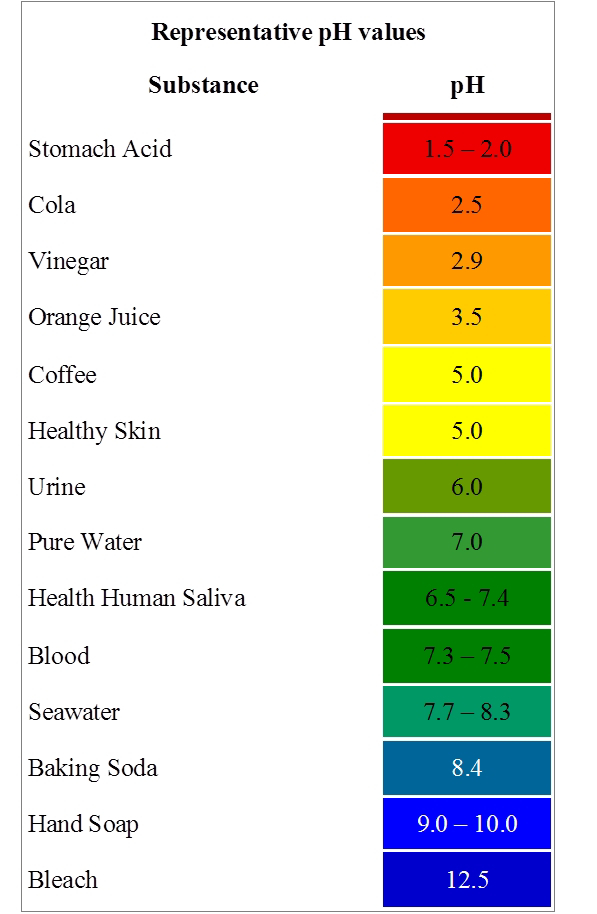
👇नीचे जो चित्र देख रहे हो pH Value Chart का इसे तुम्हें file में colour pencils से बनाने पड़ेंगे।

pH Value Chart

🤵👇ये वाला भी drawing बनाना पड़ेगा 
EXPERIMENTAL SET-UP

👇 ये भी 😅☺️

Observation
Result and Conclusion:
Precautions to be taken during the experiment:
* Use freshly prepared test sample for the experiment.

* The fruit juice sample should also be fresh to get the proper pH values.

* Glass rod or dropper used for one sample should be washed thoroughly before using it for the other samples.

Viva Voce:

(1) Who was the first scientist to introduce pH?
Ans: Soren Peder Lauritz Sorensen a Danish chemist.

(2) Define the pH of a solution.
Ans: It is a measure of the basic or acidic power of a solution. It is a scale to measure the hydrogen ion concentration in the solution. Lower the hydrogen ion concentration higher is the pH.

(3(  What is the pH of pure water at 25 °C?
Ans: 7.

(4) There are two solutions with different pH values. Solution A has a pH value 6 and solution B has a pH value 5. Which solution is more acidic?
Ans: Solution B whose pH value is 5 is more acidic.

(5) If the pH value of a solution is 9 then what is its colour?
Ans: Light blue.
 

pH Value of different samples

In 1909 S.P.L Sorenson, a Danish biochemist devised a scale known as pH to represents the H+ ion concentration of an aqueous solution. The pH value of any solution is a number that simply represents the acidity and basicity of the solution. The pH value of any solution is numerically equal to the logarithm of the inverse of the hydrogen ion (H+) concentration. Hence, the pH solution is referred to as the negative logarithm of hydrogen ion.
The basic concept of pH value
pH of Neutral Solution (Pure Water): pH of water is 7. Whenever the pH of a solution is 7, it will be a neutral solution. Such a solution will have no effect on any litmus solution or any other indicator.
pH of an Acidic Solution: All the acidic solutions have a pH of less than 7. So, whenever a solution has a pH less than 7, it will be acidic in nature and it will turn blue litmus into the red as well as methyl orange pink and phenolphthalein colourless.
pH of a basic solution: All the alkaline solution has a pH of more than 7. So, whenever a solution has more than 7 values then it will be basic in nature and it will turn red litmus to blue, methyl orange to yellow and phenolphthalein to pink.

Saturday, 28 January 2023

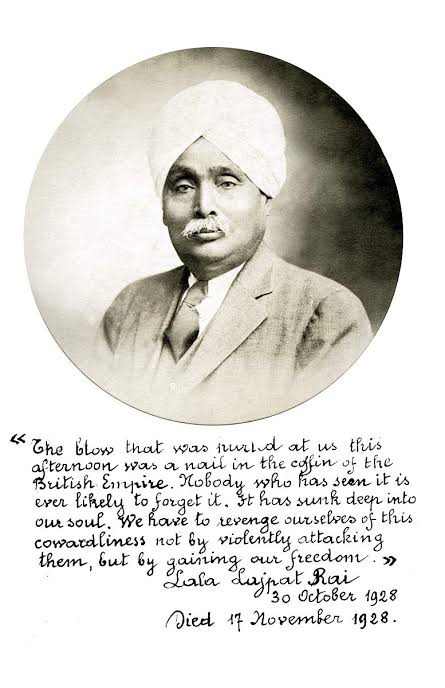
लाला लाजपत राय

लाला लाजपत राय का जन्म पंजाब के मोगा जिले में 28 जनवरी 1865 को एक अग्रवाल परिवार में हुआ था। 
                            👇
The blow that was pushed at us this afternoon was a nail in the coffin of the British Empire. Nobody who has seen it is ever likely to forget it. It has sunk deep into our soul. We have to revenge ourselves of this cowardliness not by violently attacking them, but by gaining Long our freedom. » 
Lala Lajpat Rai 
30 October 1928
Died 17 November 1928.

इन्होंने कुछ समय हरियाणा के रोहतक और हिसार शहरों में वकालत की। ये भारतीय राष्ट्रीय कांग्रेस के गरम दल के प्रमुख नेता थे। बाल गंगाधर तिलक और बिपिन चंद्र पाल के साथ इस त्रिमूर्ति को लाल-बाल-पाल के नाम से जाना जाता था। इन्हीं तीनों नेताओं ने सबसे पहले भारत में पूर्ण स्वतन्त्रता की माँग की थी बाद में समूचा देश इनके साथ हो गया। इन्होंने स्वामी दयानन्द सरस्वती के साथ मिलकर आर्य समाज को पंजाब में लोकप्रिय बनाया। लाला हंसराज एवं कल्याण चन्द्र दीक्षित के साथ दयानन्द एंग्लो वैदिक विद्यालयों का प्रसार किया, लोग जिन्हें आजकल डीएवी स्कूल्स व कालेज के नाम से जानते है। लालाजी ने अनेक स्थानों पर अकाल में शिविर लगाकर लोगों की सेवा भी की थी।

30 अक्टूबर 1928 को इन्होंने लाहौर में साइमन कमीशन के विरुद्ध आयोजित एक विशाल प्रदर्शन में हिस्सा लिया, जिसके दौरान हुए लाठी-चार्ज में ये बुरी तरह से घायल हो गये। उस समय इन्होंने कहा था: "मेरे शरीर पर पड़ी एक-एक लाठी ब्रिटिश सरकार के ताबूत में एक-एक कील का काम करेगी।" और वही हुआ भी; लालाजी के बलिदान के 20 साल के भीतर ही ब्रिटिश साम्राज्य का सूर्य अस्त हो गया। 17 नवंबर 1928 को इन्हीं चोटों की वजह से इनका देहान्त हो गया।

लालाजी की मौत का बदला
लाला जी की मृत्यु से सारा देश उत्तेजित हो उठा और चंद्रशेखर आज़ाद, भगत सिंह, राजगुरु, सुखदेव व अन्य क्रांतिकारियों ने लालाजी पर जानलेवा लाठीचार्ज का बदला लेने का निर्णय किया।[5] इन देशभक्तों ने अपने प्रिय नेता की हत्या के ठीक एक महीने बाद अपनी प्रतिज्ञा पूरी कर ली और 17 दिसम्बर 1928 को ब्रिटिश पुलिस के अफ़सर सांडर्स को गोली से उड़ा दिया। लालाजी की मौत के बदले सांडर्स की हत्या के मामले में ही राजगुरु, सुखदेव और भगतसिंह को फाँसी की सजा सुनाई गई।[6]

अनमोल वचन

1. अतीत को देखते रहना व्यर्थ है, जब तक उस अतीत पर गर्व करने योग्य भविष्य के निर्माण के लिए कार्य न किया जाए।

2. नेता वह है जिसका नेतृत्व प्रभावशाली हो, जो अपने अनुयायियों से सदैव आगे रहता हो, जो साहसी और निर्भीक हो।

3. पूरी निष्ठा और ईमानदारी के साथ शांतिपूर्ण साधनों से उद्देश्य पूरा करने के प्रयास को ही अहिंसा कहते हैं।

4.पराजय और असफलता कभी-कभी विजय की ओर ले जाने वाली जरूरी कदम होते हैं।

Friday, 27 January 2023

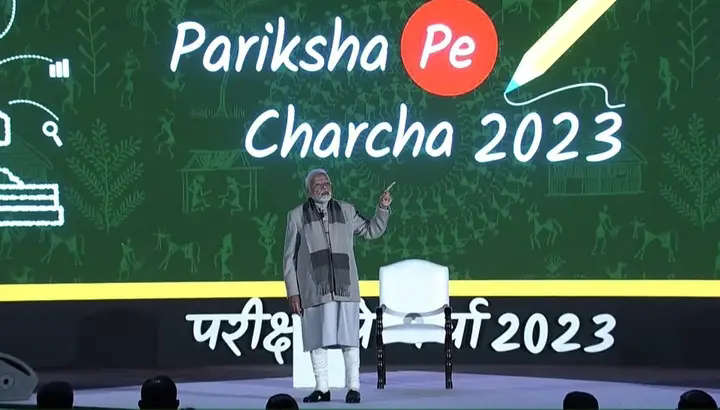
Pariksha Pe Charcha 2023

पीएम नरेंद्र मोदी ने कहा कि कभी कभी होता है कि आलोचना करने वाला कौन है ये महत्वपूर्ण होता है। जो अपना है वे कहता है तो आप उसे सकारात्मक लेते हैं लेकिन जो आपको पसंद नहीं है वे कहता है तो आपको गुस्सा आता है। आलोचना करने वाले आदतन करते रहते हैं तो उसे एक बक्से में डाल दीजिए क्योंकि उनका इरादा कुछ और है। 
PM मोदी ने कहा हमारे देश में अब गैजेट-उपयोगकर्ता के लिए औसतन छह घंटे का स्क्रीन-टाइम है। यह निश्चित रूप से उस समय और ऊर्जा की मात्रा को दर्शाता है जो किसी व्यक्ति द्वारा अर्थहीन और उत्पादकता के बिना निकाल दी जाती है। यह गहरी चिंता का विषय है और लोगों की रचनात्मकता के लिए खतरा है।

स्मार्टली करें हार्डवर्क-पीएम
पीएम मोदी ने छात्रों से कहा कि पहले काम को समझिए... हमें भी जिस चीज की जरूरत है उसी पर फोकस करना चाहिए।अगर मुझे कुछ अचीव करना है तो मुझे स्पेसिफिक एरिया पर फोकस करना होगा... तभी परिणाम मिलेगा। हमें 'स्मार्टली हार्डवर्क' करना चाहिए, तभी अच्छे परिणाम मिलेंगे।
टाइम मैनेजमेंट पर भी बोले पीएम
पीएम ने छात्रों से कहा कि केवल परीक्षा के लिए ही नहीं हमें अपने जीवन में हर स्तर पर टाइम मैनेजमेंट को लेकर जागरूक रहना चाहिए। आप ऐसा स्लैब बनाइए कि जो आपको कम पसंद विषय है उसको पहले समय दीजिए... उसके बाद उस विषय को समय दीजिए जो आपको पसंद है।
 
पीएम की सलाह- दबाव में न रहें छात्र
पीएम मोदी ने छात्रों से कहा कि दबाव में न रहें! सोचें, विश्लेषण करें, कार्य करें और फिर जो आप चाहते हैं उसे प्राप्त करने के लिए अपना सर्वश्रेष्ठ दें।
PM नरेंद्र मोदी ने कहा कि सिर्फ परीक्षा के लिए नहीं वैसे भी जीवन में हमे समय के प्रबंधन के प्रति जागरूक रहना चाहिए। काम का ढेर इसलिए हो जाता है क्योंकि समय पर उसे नहीं किया। काम करने की कभी थकान नहीं होती, काम करने से संतोष होता है। काम ना करने से थकान होती है कि इतना काम बचा है।

पीएम मोदी ने कहा कि परिवारों को अपने बच्चों से उम्मीदें होना स्वाभाविक है, लेकिन अगर यह सिर्फ 'सामाजिक स्थिति' बनाए रखने के लिए है, तो यह खतरनाक हो जाता है।

पीएम मोदी ने छात्रों से कहा कि आप अच्छा करेंगे तो भी हर कोई आप से नई अपेक्षा करेगा... चारों तरफ से दबाव होता है, लेकिन क्या हमें इस दबाव से दबना चाहिए? ऐसे ही आप भी यदि अपनी एक्टिविटी पर फोकस रहते हैं तो आप भी ऐसे संकट से बाहर आ जाएंगे। कभी भी दबाव के दबाव में ना रहें।
 
परीक्षा पर चर्चा' मेरी भी परीक्षा है- पीएम मोदी
परीक्षा पर चर्चा' मेरी भी परीक्षा है और देश के कोटि-कोटि विद्यार्थी मेरी परीक्षा ले रहे हैं... मुझे ये परीक्षा देने में आनंद आता है।

परीक्षा पे चर्चा कार्यक्रम शुरू हो चुका है। पीएम नरेंद्र मोदी छात्रों से संवाद कर रहे हैं।

पीएम नरेंद्र मोदी परीक्षा पे चर्चा के लिए तालकटोरा स्टेडियम पहुंचे। बच्चों द्वारा तैयार तकनीक पर आधारित मॉडल की प्रदर्शनी का निरीक्षण किया।

शिक्षा मंत्रालय के मुताबिक इस बार तकरीबन 38 लाख 80 हजार लोगों ने पंजीकरण कराया है। इनमें 31 लाख 24 हजार छात्र, 5 लाख 60 हजार शिक्षक और 1 लाख 95 हजार अभिभावक शामिल है। पिछली बार साल 2022 की तुलना में आंकडा 15.7 लाख ज्यादा है।

पीएम मोदी के परीक्षा पे चर्चा का कार्यक्रम सुबह 11 बजे से लाइव होगा। इसके बाद छात्र, टीचर और अभिभावक यह प्रोग्राम देख सकेंगे। कार्यक्रम का आयोजन तालकटोरा इंडोर स्टेडियम में किया जा रहा है।

प्रधानमंत्री इस संवाद कार्यक्रम के दौरान तनाव को पीछे छोड़ने और परीक्षा के डर को दूर करने तथा परीक्षा को त्योहार की तरह मनाने के टिप्स साझा करेंगे।

इस साल पीपीसी यानी परीक्षा पे चर्चा 2023 के छठे संस्करण के लिए पंजीकरण की प्रक्रिया 25 नवंबर से शुरू हुई थी, जो 30 दिसंबर, 2022 तक चली थी।

Winners

विज्ञान कहता है कि एक वयस्क स्वस्थ पुरुष एक बार संभोग के बाद जो वीर्य स्खलित करता है, उसमें 400 मिलियन शुक्राणु होते हैं...... ये 40 करोड़ श...