1. ज्ञान (Knowledge) – ज्ञान को ब्लूम ने प्रथम स्थान दिया क्योंकि बिना ज्ञान के बाकी बिंदुओं की कल्पना करना असंभव हैं। जब तक किसी वस्तु के बारे में ज्ञान (knowledge) नही होगा तब तक उसके बारे में चिंतन करना असंभव है और अगर संभव हो भी जाये तो उसको सही दिशा नही मिल पाती। इसी कारण ब्लूम के वर्गीकरण में इसकी महत्ता को प्रथम स्थान दिया गया।

2. बोध (Comprehensive) – ज्ञान को समझना उसके सभी पहलुओं से परिचित होना एवं उसके गुण-दोषों के सम्बंध में ज्ञान अर्जित करना।
3. अनुप्रयोग (Application) – ज्ञान को क्रियान्वित (Practical) रूप देना अनुप्रयोग कहलाता हैं प्राप्त किये गए ज्ञान की आवश्यकता पड़ने पर उसका सही तरीके से अपनी जिंदगी में उसे लागू करना एवं उस समस्या के समाधान निकालने प्राप्त किये गए ज्ञान के द्वारा। यह ज्ञान को कौशल (Skill) में परिवर्तित कर देता है यही मार्ग छात्रों को अनुभव प्रदान करने में उनकी सहायता भी करता हैं।
4. विश्लेषण (Analysis) – विश्लेषण से ब्लूम का तात्पर्य था तोड़ना अर्थात किसी बड़े प्रकरण (Topic) को समझने के लिए उसे छोटे-छोटे भागों में विभक्त करना एवं नवीन ज्ञान का निर्माण करना तथा नवीन विचारों की खोज करना। यह ब्लूम का विचार समस्या-समाधान में भी सहायक हैं।
5. संश्लेषण (Sysnthesis) – प्राप्त किये गए नवीन विचारो या नवीन ज्ञान को जोड़ना उन्हें एकत्रित करना अर्थात उसको जोड़कर एक नवीन ज्ञान का निर्माण करना संश्लेषण कहलाता हैं।
6. मूल्यांकन (Evalution) – सब करने के पश्चात उस नवीन ज्ञान का मूल्यांकन करना कि यह सभी क्षेत्रों में लाभदायक है कि नहीं। कहने का तात्पर्य है कि वह वैध (Validity) एवं विश्वशनीय (Reliebelity) हैं या नहीं। जिस उद्देश्य से वह ज्ञान छात्रों को प्रदान किया गया वह उस उद्देश्य की प्राप्ति करने में सक्षम हैं कि नही यह मूल्यांकन द्वारा पता लगाया जा सकता हैं।
2001 रिवाइज्ड ब्लूम वर्गीकरण |Revised Bloom Taxonomy
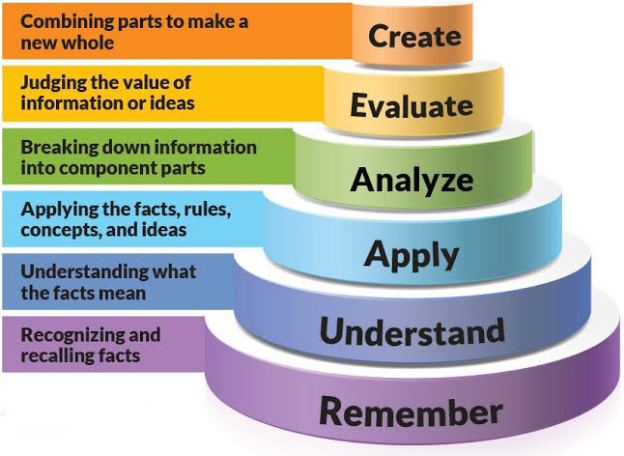
ब्लूम के वर्गीकरण (Bloom Taxonomy) में संशोधित रूप एंडरसन और कृतवोल ने दिया। इन्होंने वर्तमान की आवश्यकताओं को देखते हुए उसमे कुछ प्रमुख परिवर्तन किये। जिसे रिवाइज्ड ब्लूम वर्गीकरण (Revised bloom taxonomy) के नाम से जाना जाता हैं।
1. स्मरण (Remembering) – प्राप्त किये गये ज्ञान को अधिक समय तक अपनी बुद्धि (Mind) में संचित रख पाना एवं समय आने पर उसको पुनः स्मरण (recall) कर पाना स्मरण शक्ति का गुण हैं।
2. समझना (Understanding) – प्राप्त किया गया ज्ञान का उपयोग कब, कहा और कैसे करना है यह किसी व्यक्ति के लिए तभी सम्भव हैं जब वह प्राप्त किये ज्ञान को सही तरीके से समझे।
3. लागू करना (Apply) – जब वह ज्ञान समझ में आ जाये जब पता चल जाये कि इस ज्ञान का प्रयोग कब,कहा और कैसे करना हैं तो उस ज्ञान को सही तरीके से सही समय आने पर उसको लागू करना।
4. विश्लेषण (Analysis) – उस ज्ञान को लागू करने के पश्चात उसका विश्लेषण करना अर्थात उसको तोड़ना उसको छोटे-छोटे भागों में विभक्त करना।
5. मूल्यांकन (Evaluate) – विश्लेषण करने के पश्चात उसका मूल्यांकन करना कि जिस उद्देश्य से उसकी प्राप्ति की गयी है वह उस उद्देश्य की प्राप्ति कर रहा हैं या नहीं इसका पता हम उसका मूल्यांकन करके कर सकते हैं।
6. रचना (Creating) – मूल्यांकन करने के पश्चात उस स्मरण में एक नयी विचार का निर्माण होता हैं जिससे एक नवीन विचार की रचना होती हैं।

Meaning of Bloom Taxonomy in Hindi
भावात्मक उद्देश्य (Affective Domain)
Bloom taxonomy के अंतर्गत भावात्मक उद्देश्य (Affective Domain)का निर्माण क्रयवाल एवं मारिया ने 1964 में किया। इन्होंने छात्रों के भावात्मक पक्ष पर ध्यान देते हुए कुछ प्रमुख बिंदुओं को हमारे सम्मुख रखा। भावात्मक पक्ष से तात्पर्य हैं कि उस प्रत्यय (Topic) के प्रति छात्रों के भावात्मक (गुस्सा,प्यार,चिढ़ना, उत्तेजित होना, रोना आदि) रूप का विकास करना।
1. अनुकरण (Receiving) – भावात्मक उद्देश्य (Affective Domain) की प्राप्ति के लिए सर्वप्रथम बालको को अनुकरण (नकल) के माध्यम से ज्ञान प्रदान करना चाहिए। एक अध्यापक को छात्रों को पढ़ाने के समय उस प्रकरण का भावात्मक पक्ष को महसूस कर उसको क्रियान्वित रूप देना चाहिये जिससे छात्र उसका अनुकरण कर उसको महसूस कर सकें।
2. अनुक्रिया (Responding) – तत्पश्चात अनुकरण कर उस अनुकरण के द्वारा क्रिया करना अनुक्रिया कहलाता हैं।
3. अनुमूल्यन (Valuing) – उस अनुक्रिया के पश्चात हम उसका मूल्यांकन करते है कि वह सफल सिध्द हुआ कि नहीं।
4. संप्रत्यय (Conceptualization) – हम उसके सभी पहलुओं पर एक साथ विचार करते हैं।
5. संगठन (Organization) – उस प्रकरण को एक स्थान में रखकर उसके बारे में चिंतन करते हैं उसमें विचार करना शुरू करते हैं।
6. चारित्रीकरण (Characterisation) – तत्पश्चात हम उस पात्र का एक चरित्र निर्माण करते हैं जिससे हमारे भीतर उसके प्रति एक भाव उत्त्पन्न होता हैं जैसे गुंडो के प्रति गुस्से का भाव हीरो के प्रति सहानुभूति वाला भाव आदि।
इन सभी बिंदुओं को हम एक माध्यम के द्वारा समझ सकते है जब हमारा बर्थडे (Birthday) होता हैं और कोई व्यक्ति हमारे लिए उपहार (Gift) लाता है तो हम उस समय खुश होते है या उसको धन्यवाद बोलते हैं अर्थात अनुक्रिया करते हैं गिफ्ट प्राप्ति के लिये। तत्पश्चात जब सभी व्यक्ति चले जाते है तो हम उसको देखते हैं और अंदाजा लगाते है कि इसका मूल्य कितना होता अर्थात उसकी Valuing करते हैं उसके बाद उसको सही जगह रखने के लिए उचित जगह निश्चित करते हैं अर्थात उसको संगठित करते हैं तत्पश्चात हम उस गिफ्ट देने वाले व्यक्ति के चरित्र का निर्माण करते हैं कि उसके लिए हम कितने महत्वपूर्ण है( यह एक सिर्फ उदाहरण हैं जिसके माध्यम से आपको समझाया जा रहा हैं सच तो यह है कि इस प्रकार किसी के चरित्र का अंदाजा नहीं लगाया जा सकता। )

मनोशारीरिक उद्देश्य (Psychomotor Domain)
Bloom taxonomy के अंतर्गत मनोशारीरिक उद्देश्य का निर्माण सिम्पसन ने 1969 में किया। इन्होंने ज्ञान के क्रियात्मक पक्ष पर बल देते हुए निन्म बिंदुओं को प्रकाशित किया।
1. उद्दीपन (Stimulation) – उद्दीपन से आशय कुछ ऐसी वस्तु जो हमे अपनी ओर आकर्षित करती हैं तत्पश्चात हम उसे देखकर अनुक्रिया करतें हैं जैसे भूख लगने पर खाने की तरफ क्रिया करते हैं इस उदाहरण में भूख उद्दीपन हुई जो हमें क्रिया करने के लिये उत्तेजित कर रहीं हैं।
2. कार्य करना (Manipulation) – उस उद्दीपन के प्रति क्रिया हमको कार्य करने पर मजबूर करती हैं।
3. नियंत्रण (Control) – उस क्रिया पर हम नियंत्रण रखने का प्रयास करते हैं।
4. समन्वय (Coordination) – उसमें नियंत्रण रखने के लिए हम उद्दीपन ओर क्रिया के मध्य समन्वय स्थापित करते हैं।
5. स्वाभाविक (Naturalization) – वह समन्वय करते करते एक समय ऐसा आता हैं कि उनमें समन्वय स्थापित करना हमारे लिए सहज हो जाता हैं हम आसानी के साथ हर परिस्थिति में उनमें समन्वय स्थापित कर पाते हैं वह हमारा स्वभाव बन जाता हैं।
6. आदत ( Habit formation) – वह स्वभाव में आने के पशचात हमारी आदत बन जाता है। ऐसी परिस्थिति दुबारा आने के पश्चात हम वही क्रिया एवं प्रतिक्रिया हमेशा करते रहते हैं जिससे हमारे अंदर नयी आदतों का निर्माण होता हैं।
निष्कर्ष Conclusion –
ब्लूम के वर्गीकरण में ब्लूम ने छात्रों के ज्ञान एवं बौद्धिक पक्ष पर पूरा ध्यान केंद्रित किया हैं। वह छात्रों के सर्वांगीण विकास के लिये बौद्धिक विकास पर अध्यधिक बल देते हैं। उनका यह वर्गीकरण छात्रों के व्यवहार में वांछित परिवर्तन लाने हेतु काफी उपयोगी सिद्ध हुआ हैं। ब्लूम के वर्गीकरण के माध्यम से चलकर ही हम शिक्षण के उद्देश्यों की प्राप्ति कर सकतें हैं।
दोस्तों आज आपने जाना की ब्लूम का वर्गीकरण क्या हैं? (Bloom Taxonomy in Hindi) अगर आपको हमारी यह पोस्ट पसंद आयी हो। तो इस पोस्ट को अपने अन्य मित्रो के साथ अवश्य शेयर करें।


