Wednesday, 8 February 2023

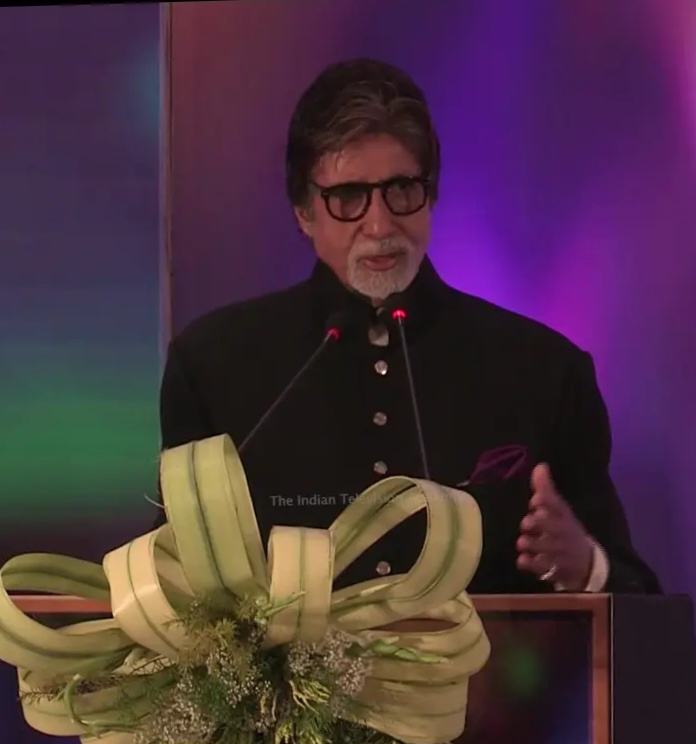
KBC 14: In the year 2001, Mr. Amitabh Bachchan won the Indian Television Academy Awards for Best Host for….?

अपने एंग्री यंग मैन मोनिकर को अभी भी प्रासंगिक रखते हुए, अमिताभ बच्चन ने निर्देशक अमित शर्मा के साथ एक टीवी विज्ञापन के लिए शूटिंग की और एक्शन और स्टंट के प्रति अपने समर्पण और जुनून से पूरे दल को आश्चर्यचकित कर दिया।
79 वर्षीय अमिताभ बच्चन ने शूटिंग से कुछ ही मिनट पहले चालक दल और निर्देशक को सूचित किया कि वह अपने स्टंट खुद करेंगे। कहने की जरूरत नहीं है कि प्रोडक्शन क्रू दोनों प्रभावित और हैरान थे।

एक्शन सीक्वेंस को कोरियोग्राफ करने वाले एक्शन डायरेक्टर मनोहर वर्मा ने ईटाइम्स को बताया, “हम एक बॉडी डबल के साथ तैयार थे, लेकिन जब मिस्टर बच्चन सेट पर आए तो उन्होंने निर्देशक से कहा कि वह अपने स्टंट खुद करना पसंद करेंगे। हमें बहुत सी सावधानियां भी बरतनी थीं।”

श्री बच्चन को एक के बाद एक तीन कड़े कांच के पैनल को तोड़ना था और उन्होंने उनमें से प्रत्येक के लिए लगभग एक टेक में ऐसा किया। वर्मा ने कहा, "श्री बच्चन ने इसे एक समर्थक की तरह माना और वह स्पष्ट रूप से इस तथ्य का प्रतीक हैं कि उम्र सिर्फ एक संख्या है।" सेट पर मौजूद लोगों को 'दीवार' और 'जंजीर' के एंग्री मैन की याद आ गई।

वर्मा ने बाद में 'सरदार उधम' और 'मिर्जापुर' जैसी परियोजनाओं पर काम किया है, और श्री बच्चन के साथ विज्ञापनों में भी काम किया है। उन्होंने शूजीत सरकार की 'शूबाइट' पर भी काम किया है, जिसमें मिस्टर बच्चन भी मुख्य भूमिका में थे। वरिष्ठ अभिनेता के पेशेवर तरीकों और एक्शन के जुनून के बारे में बोलते हुए, वर्मा ने कहा, “वह नंबर एक हैं और कोई भी उनका मुकाबला नहीं कर सकता, आज की पीढ़ी से भी नहीं। वह सिनेमा के लिए एक किताब की तरह हैं, चाहे वह एक्शन हो या अन्य दृश्य। उनकी समय की पाबंदी, उनकी ऑन-सेट नैतिकता अभूतपूर्व है। वह जितना हो सके सेट पर रहना पसंद करते हैं और छोटी से छोटी कार्रवाई को देखते हैं। ब्रेक के दौरान वह सिर्फ अपनी वैनिटी वैन में जाते हैं

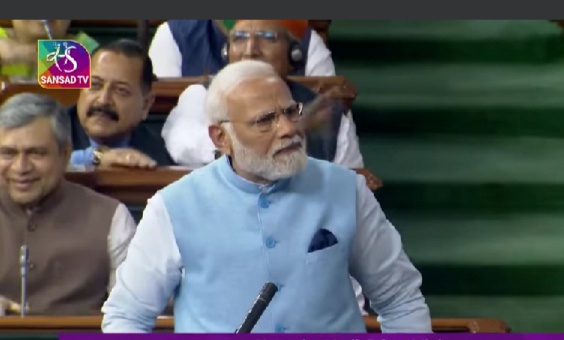
बजट सत्र: पीएम नरेंद्र मोदी लोकसभा में धन्यवाद प्रस्ताव पर दिए जवाब

बजट सत्र: पीएम नरेंद्र मोदी लोकसभा में धन्यवाद प्रस्ताव पर दिए जवाब
प्रधानमंत्री नरेंद्र मोदी का संबोधन कांग्रेस नेता राहुल गांधी द्वारा हिंडनबर्ग-अडानी पंक्ति के बीच राष्ट्रपति मुर्मू के धन्यवाद प्रस्ताव पर बोलने के एक दिन बाद आया है, जो विपक्ष के साथ बहस में प्रमुखता से उठा था।
प्रधानमंत्री नरेंद्र मोदी आज लोकसभा में
राष्ट्रपति के अभिभाषण पर धन्यवाद प्रस्ताव पर चर्चा का जवाब देंगे

प्रधानमंत्री नरेंद्र मोदी का संबोधन कांग्रेस नेता राहुल गांधी द्वारा हिंडनबर्ग-अडानी विवाद के बीच राष्ट्रपति मुर्मू के धन्यवाद प्रस्ताव पर बोलने के एक दिन बाद आया है।

बजट सत्र: पीएम नरेंद्र मोदी आज लोकसभा में धन्यवाद प्रस्ताव पर जवाब देंगे

प्रधानमंत्री नरेंद्र मोदी का संबोधन कांग्रेस नेता राहुल गांधी द्वारा हिंडनबर्ग-अडानी पंक्ति के बीच राष्ट्रपति मुर्मू के धन्यवाद प्रस्ताव पर बोलने के एक दिन बाद आया है, जो विपक्ष के साथ बहस में प्रमुखता से उठा था।
प्रधानमंत्री नरेंद्र मोदी आज लोकसभा में राष्ट्रपति के अभिभाषण पर धन्यवाद प्रस्ताव पर चर्चा का जवाब देंगे। 31 जनवरी को लोकसभा और राज्यसभा के संयुक्त सत्र में राष्ट्रपति द्रौपदी मुर्मू के अभिभाषण के साथ बजट सत्र शुरू हुआ।

प्रधानमंत्री नरेंद्र मोदी का संबोधन कांग्रेस नेता राहुल गांधी द्वारा हिंडनबर्ग-अडानी विवाद के बीच राष्ट्रपति मुर्मू के धन्यवाद प्रस्ताव पर बोलने के एक दिन बाद आया है।

मंगलवार को, राहुल गांधी ने मंगलवार को हिंडनबर्ग रिपोर्ट पर लोकसभा में विपक्ष के हमले का नेतृत्व किया, जिसमें दावा किया गया कि 2014 में भाजपा के सत्ता में आने के बाद गौतम अडानी की किस्मत में जबरदस्त वृद्धि हुई, क्योंकि वह वैश्विक अमीर सूची में 609वें से दूसरे स्थान पर पहुंच गए थे। अंत में हाजिर। लोकसभा में राष्ट्रपति के अभिभाषण के धन्यवाद प्रस्ताव पर बहस में भाग लेते हुए, पहले विपक्षी अध्यक्ष के रूप में, गांधी ने मोदी के खिलाफ आरोपों की झड़ी लगा दी।

गांधी ने आरोप लगाया कि सरकार ने अडानी के पक्ष में नियमों को तोड़-मरोड़ कर पेश किया और कहा कि बिना किसी पूर्व अनुभव के किसी को भी हवाई अड्डों के विकास में शामिल नहीं किया जाएगा।

राहुल गांधी ने आरोप लगाया, "सरकार ने इस नियम को बदल दिया और अडानी को छह हवाईअड्डे दिए गए। उसके बाद भारत के सबसे रणनीतिक, लाभदायक हवाईअड्डे, मुंबई हवाईअड्डे को एजेंसियों का उपयोग करके जीवीके से छीन लिया गया।"

गांधी ने कहा, "परिणाम यह है कि भारत का 24 प्रतिशत हवाई यातायात और 31 प्रतिशत हवाई माल अडानी के हवाई अड्डों से होकर गुजरता है।"

सत्ता पक्ष ने बार-बार गांधी से अपने दावों को प्रमाणित करने के लिए कहा, यह कहते हुए कि बिना दस्तावेजी सबूत के सरकार के खिलाफ इस तरह के आरोप नहीं लगाए जा सकते।

उन्होंने कहा, "अडानी ने कभी ड्रोन नहीं बनाए जबकि एचएएल ऐसा करता था और अन्य कंपनियां करती हैं। उनकी चार रक्षा कंपनियां हैं और उन्होंने यह काम पहले नहीं किया है, छोटे हथियार, स्नाइपर राइफल, सभी अडानी द्वारा बनाए गए हैं।"

Art Integrated Learning

ART INTEGRATED LEARNING
Art Integrated Learning (AIL) is a teaching-learning model which is based on learning ‘through the arts’ and ‘with the arts’: it is a process where art becomes the medium of teaching-learning, a key to understanding concepts within any subject of the curriculum.

Learners explore creatively while building connections between different concepts through various art forms. Art experiences, both in visual (drawing and painting, clay modelling, pottery, paper crafts, mask and puppet making, heritage crafts etc.) and performing arts (music, dance, theatre, puppetry etc.) lead to a better understanding and construction of knowledge about different concepts. Arts have the flexibility to accommodate age-appropriate opportunities for learners who can explore at their individual pace. This resonates with the experiential learning approach.

STAGE WISE LEARNING OBJECTIVES

Learning through the arts can take place at all levels of schooling. Art integrated learning is experiential in nature and makes all children respond with their imagination and emotional strengths. The needs of children will vary with age, social contexts and ability. Stage-wise objectives for engaging children in art integrated learning are as follows:

PRE- PRIMARY 
At this stage children are both highly inquisitive and energetic. Creative activities such as drawing, painting, clay work, music are both appealing and engaging for young children. At this stage ‘all education should be through the arts’. The objective of children’s participation in visual and performing arts is to:

* Make learning joyful and engaging.

* Encourage children to be aware of their environment through keen observation and unhindered exploration.

* Promote sensitivity towards their environment.
Allow free emotional expression, communication and creative involvement.

*Facilitate children to express freely and spontaneously

PRIMARY 
• Art education at this stage needs to link with all subjects such that it becomes a tool of teaching-learning concepts. 

• Art can play an effective role in strengthening the child’s curiosity, imagination, and sense of wonder. 

• They should have a positive impact on the skills related to intellectual, socio-emotional, motor, language and overall literacy. 

• The objectives of AIL at primary level are to help children:

• Periodic re-grouping of children is done for better exchange of ideas and accommodating different learning levels

• Children are allowed to use diverse art forms and material to avoid monotony

• ICT as an exploratory tool is encouraged

• Children are provided with opportunities to interact with local/ regional artisans to enhance their sensitivity and awareness towards indigenous cultural heritage

• Field visits to places like museums, galleries, historical monuments, melas, bazaars, haat etc. are incorporated.

• The extent to which the art experience can be taken to connect it with the concept/subject content
Art expereince is utilised as an assessment tool also.

EXPERIENCE JOY AND EAGERNESS TO LEARN 
* Learn to live in an inclusive environment.
* Discover concepts of Mathematics and Science in the world around them.
* Be aware of interdisciplinary connections.
* Enhance observation, curiosity, exploration and creative and free expression
* Explore and understand body movement and coordination
* Develop expressive communication and critical thinking skills
* Foster an inquisitive attitude towards learning and knowledge
* Understand and regulate their emotions
* Create awareness of rich heritage and cultural diversity

UPPER PRIMARY 
√ During this stage children are ready to comprehend more complex interconnections between concepts and the environment. 

√ AIL can allow children build on simple concepts as well as relate them with academic content meaningfully. 

√ Children also enhance the skill to work in groups and explore ideas together.

√ The objectives of AIL at the upper primary level are to help children:

EXPLORE MULTIPLE PERSPECTIVES OF CONCEPTSE
* Construct knowledge of themes, subjects and concepts and be aware of the inter-disciplinary connections

* Develop a pluralistic approach and appreciate different possibilities

* Promote teamwork and mutual appreciation.

* Enhance communication skills, language skills and problem solving skills.

* Build sensitivity towards environmental and societal concerns

* Create art and apply their artistic skills in day-to-day activites.

* Learn inclusive practices of respect, care, empathy and compassion

* Foster socio-emotional competencies and cognitive competence.

*Understand and regulate their emotions.

* Create awareness of rich heritage and cultural diversity.

STRATEGIES FORIMPLEMENTATION 
The following steps are recommended for effective implementation of AIL

(1) Capacity Building
(2) Planning of Activities
(3) Planning Time
(4) Planning Resources
(5( Classroom Management
(6) Community Involvement

1. Capacity Building
Introducing art as a resource will require re-orienting the school system in the use of it as pedagogical tool. All stakeholders of school education, including the school management need to be oriented to understand the importance and the relevance of this pedagogy. Capacity building here refers to any effort being made to improve the understanding, skills of educators and others to implement AIL in their school. It reduces a school’s reliance on outside support or services, by building their internal capacity. Teacher-training workshops and teacher observation programmes should be undertaken to bring about a paradigm shift in the ways students learn and the ways teachers approach teaching and learning.

2. Planning of Activities
Once the teacher begins to utilise AIL methodology, she would need to work on the dynamics of planning.

AIL would require linking art experience to the subject matter seamlessly and to identify methods and techniques to engage children in group activities. Teacher’s preplanning; familiarity with the subject combined with attention to guiding and reviewing children’s responses will keep the journey on track.


Stage Wise Planning of AIL Activities

PRE-PRIMARY 
As recommended by NCF 2005, all the education at this stage should be through arts: drawing, painting, clay modelling, singing, actions or movements. 

It further emphasizes that 90% of the curriculum must be art oriented.

Therefore, while planning activities for this stage, the teacher must keep the above criteria in mind. 

Another important point for this stage is to focus on the process and not on the product. 

While planning activities for this stage, focus should be on using locally available, age appropriate materials such as pebbles, seeds and beads, leaves, flowers, sand, clay, sea shells, feathers, wood sticks, tree barks, natural colours, etc.

PRIMARY 
At the primary stage, arts should be integrated with all subjects and used as an approach for teaching and learning of different concepts. This will help children freely express their ideas and emotions. 

They will also develop all the senses through keen observation, curious exploration and spontaneous expression. 

As is the system in most of our primary schools, one teacher teaches all subjects to her class which gives her the freedom and scope to plan art experiences in a way that cater to learning of multiple disciplines. While planning activities for this stage, the teacher should keep in mind that:

The process and not the product should be focused upon

The art experience should be planned such that it serves an interdisciplinary purpose catering to multilevel needs of the classroom.

In case of multi-grade classrooms (classrooms where there are students from different standards), the teacher should pay attention to the composition of the groups as age group becomes a fundamental point while designing activities. 

The need of inclusive classrooms should be focused upon.

The art integration in classes 1-3 and 4-5 should be 80 and 70 percent respectively. (NCF 2005)

The children of classes I and II should be left with the material to experiment and express on subjects and situations they observe around them.

Class III onwards they can be given simple topics related to their day to day life and immediate environment which also covers their curriculum

UPPER PRIMARY 
At the upper primary stage, emphasis should be laid on the use of learner’s own imagination and development of their creative expressions. It is suggested that children of this stage work together in teams for their socio-emotional development and enhancement of life skills (inter-personal communication, collaboration and cooperation, respect for diversity and appreciation for each other’s perspective, developing leadership skills, problem solving abilities etc.). 

As this age group is the beginning of adolescence, their growing up concerns are also addressed naturally and effectively through integration of arts.

While planning activities for this stage, the teacher needs to see that:

The focus is on the process and not on the product

Needs of inclusive classrooms are taken care

While making the groups they should follow a heterogeneous approach to ensure no discrimination on the lines of social prejudice and gender stereotypes

Periodic re-grouping of children is done for better exchange of ideas and accommodating different learning levels

Children are allowed to use diverse art forms and material to avoid monotony

ICT as an exploratory tool is encouraged

Children are provided with opportunities to interact with local/ regional artisans to enhance their sensitivity and awareness towards indigenous cultural heritage

Field visits to places like museums, galleries, historical monuments, melas, bazaars, haat etc. are incorporated

The extent to which the art experience can be taken to connect it with the concept/subject content

Art expereince is utilised as an assessment tool also.
3. Planning of time

Time management at every stage is an important aspect of teachers’ professional competence and productivity. 

Teachers can sometimes find it challenging to take out time for organizing art experiences, due to paucity of time. 

This can compromise the creation of a joyful and experiential learning environment. 

On the contrary there are interesting time-slots availabe in schools such as morning assembly, festivals of celebrations, special assemblies and excursions, which can be utilised for mass art experiences and can be easily linked to the subject content and learning outcomes.

4. Resource Planning

Proper planning of resources adds a novelty to the art integrated experience. 

Regular research and extensive groundwork by the teacher helps them to create a rich repository of resources which include regional/local resources. 

The resources should be easy to use and convenient to procure as their easy availability will ensure increased frequency of usage. 

While selecting the resources, especially the physical ones, one should be confident of the fact that there is flexibility in the choice of resources.

Types of Resources

Material Resources : While planning and selecting material and equipment for AIL activities one can practice thumb rule of following five points – 
Resources should be
(a) Economical,
(b) Environment friendly,
(c) Reusable,
(d) Innovative and
(e) Locally available.

Community Resources : Ways and forums to involve the local community meaningfully must be devised to develop a healthy and proactive community-school partnership. When provided with opportunities to interact with local/regional artisans, students enhance their sensitivity and awareness towards the indigenous cultural heritage. For example, school authorities may invite local weavers, potters and different service providers so that students may have an intimate engagement with them. Families of the children may also be involved in a positive manner with the school to support learning of children. For effective and meaningful community participation it is recommended that periodic field trips/excursions are included to visit places like hospitals, post office, bus depots, railway stations, etc.

Space : It has been seen that in the traditional set up learning is very often confined to specific areas: whereas in AIL, it is recommended that the teacher needs to become more flexible while selecting and using learning spaces. Spaces/places should be such which provide children with an opportunity to explore, experiment, create and express themselves freely.

Class Room Management
Class room is the space that becomes a fertile ground for learning if utilized and managed appropriately. Given below are some suggestions for effective classroom management:

Flexible seating arrangement which provides space for activities with free movement of children and teachers. 

For better efficacy of AIL, it is recommended that the traditional seating arrangement (rows and columns) should be discouraged and arrangements such as sitting in U-shape, semi-circle, etc. should be encouraged to create space for activities and presentations.

Teachers/facilitators should move across the classroom space while interacting with the children. 

This will help teacher reach and facilitate every child in the classroom.

AIL approach recommends children working in groups for active engagement and collective learning. 

At pre-primary stage group sizes should be of 2, in standards 1 and 2 groups can be of 2-3 children at a time and in standards 3 to 5 groups can be of 4-5 children. 

By the upper-primary stage, children develop better group dynamics: therefore teachers can plan the grouping of children keeping in mind the need of the activity and not the number.

For better results, keep changing the configuration of groups which will aid students in getting to know each other better, appreciate each other’s strengths and abilities and learn collaboratively for better comprehension of the subject, leading to enhanced socio-emotional skills.

Encourage the process of inclusion while respecting all kinds of diversity. 
While forming groups, the multi-level and multigrade nature of the classroom should also be kept in mind.

Presentations by children should be encouraged to create an interactive learning environment.

Every classroom should have display areas where children’s work can be displayed.

A reading corner may be created where children have easy access to story books, comics, folklores, fables etc.

The classroom can also have an innovative performing space/area which can be used for regular presentations and performances

If practiced in true spirit, the above will not only help children to develop a sense of ownership of their classroom and school but can also transform them into learners for life.

ASSESSMENT IN AIL
Assessment through art integrated learning helps the facilitator to move away from the traditional paper-pencil or oral and recall method towards a continuous and comprehensive assessment method which can help assess both the learning of the subject as well as the socio-emotional development of the student. 

It helps to democratize the process of assessment, in which students are offered multiple modes to express their learning. Hence, it becomes an effective tool for both competencies-based learning and to assess the competency- based learning.

Find out why your life is importan

Find out why your life is important…
Stop what you are doing. Do you want to know why your life is valuable? Find out how you can have a great future.
I would like to take you on a journey. It is a journey of discovery in which we search together for answers to life’s most important questions.

Have you ever wondered why you exist? And whether your life has meaning? Or do you assume that your life is determined by circumstances? Or perhaps there is someone pulling the strings? Why do “good” and “evil exist? And just one more: Is there something after death?

I’d love to take you on a journey of discovery. We begin our journey in the following short chapters. But you can also read the summary.


Find out why your life is important…
Stop what you are doing. Do you want to know why your life is valuable? Find out how you can have a great future.

I would like to take you on a journey. It is a journey of discovery in which we search together for answers to life’s most important questions.
Have you ever wondered why you exist? And whether your life has meaning? Or do you assume that your life is determined by circumstances? Or perhaps there is someone pulling the strings? Why do “good” and “evil exist? And just one more: Is there something after death?

I’d love to take you on a journey of discovery. We begin our journey in the following short chapters. But you can also read the summary.

Chapter 1 ~ How it all started
It is a beautiful spring day when I start writing down this story for you. I am in our garden, surrounded by flowers in full bloom and butterflies flying from one flower to the next. One of them lands on a large, yellow flower and feeds on the nectar. Carefully, I walk towards it and look at the butterfly up close. I am amazed at the beautiful shape and colours. When it has finished, it flies off with a thick layer of pollen on its body. Its journey continues to another flower.

Find out why your life is important…
Stop what you are doing. Do you want to know why your life is valuable? Find out how you can have a great future.

I would like to take you on a journey. It is a journey of discovery in which we search together for answers to life’s most important questions.

Have you ever wondered why you exist? And whether your life has meaning? Or do you assume that your life is determined by circumstances? Or perhaps there is someone pulling the strings? Why do “good” and “evil exist? And just one more: Is there something after death?

I’d love to take you on a journey of discovery. We begin our journey in the following short chapters. But you can also read the summary.

I start writing down this story for you. I am in our garden, surrounded by flowers in full bloom and butterflies flying from one flower to the next. One of them lands on a large, yellow flower and feeds on the nectar. Carefully, I walk towards it and look at the butterfly up close. I am amazed at the beautiful shape and colours. When it has finished, it flies off with a thick layer of pollen on its body. Its journey continues to another flower.
Did you know that there are 400,000 different types of flowers and plants on earth? Can you imagine? I am still amazed how many differences there are between the flowers I see. They have beautiful colors and every specie has its own shape.

Because all the differences amazed me, I started studying nature. Those differences are wonderful, but what makes plants, animals and humans live, is even more amazing.
Our body is a great miracle
Have you ever bought a do-it-yourself kit? A bookcase for example. The kit contains a lot of shelves, screws and a manual. Your body is a little like that. It exists of billions of cells and every cell contains a manual for your entire body. This manual is called DNA – a blueprint of your body. Your DNA makes you look the way you do.

Even the first cell with which your life began already had this complete blueprint. Your DNA specifies how your body is constructed – head, arms, legs, your eye colour and the shape of your nose. But it also determines how your organs and limbs work together. Isn’t that amazing?

So DNA is the manual of your body. It is a bit like the code of computer software. This code is needed for your computer to function correctly. It makes it possible to surf the internet on your computer, or write a letter.

Researchers discovered that if you were to write down human DNA [1] in a book, you would need more than 1 million pages! That is more than 2,500 large volumes. And this code is stored in every cell of your body [2].

Did life start by accident?
Many scientists believe that life on earth started by accident. They think that it was caused by a series of small steps and chemical processes. But more and more scientists realise that DNA is so complex that it cannot have originated from a series of accidental chemical reactions.
Let us think again about computer software. It is not very likely you are a computer programmer, so you probably did not know that the DNA in one human cell is just as complex as Windows computer software. Do you think it is likely that complex computer software like Windows came into being by a series of coincidences? This program contains about just as many instructions (code) as the human DNA [3] Windows was created by thousands of computer programmers who worked on it for years and years.
There is no code without a design. No computer software came into being by accident, without a design and without programmers working on it. If our DNA is as complex as computer software, could humans have come into being by accident?

CLASS 9, SCIENCE. CHAPTER 12 SOUND

CLASS 9, SCIENCE. - CHAPTER 12     
                      SOUND
What is a sound board? Explain the working of a soundboard with the help of a labelled diagram.
Answer:
The reflection of sound may take place at curved surfaces also. This fact is made use of in the large halls to spread sound evenly throughout the hall. This is done by using sound boards. The speaker is located at the focus of the sound board (Fig.) and the concave reflecting sound boards are placed behind the speakers in a large hall. The sound board prevents the spreading out of the sound waves in various directions. It sends the sound waves from the speaker at its focus, by reflection towards the audience. This helps in making the speech readily audible even at a distance.
Explain the working and application of a sonar .
Answer: Working: SONAR Consists of a transmitter and a detector and is installed in a boat or a ship as shown in the fig. The transmitter produces and transmits ultrasonic waves. These waves travel through water and after striking the object on the seabed, get reflected back and are sensed by the detector. The detector converts the ultrasonic waves into electrical signals which are appropriately interpreted. The distance of the object that reflected the sound wave can be calculated by knowing the speed of sound in water and the time interval between the transmission and reception of the ultrasound.
         TOPICS TO BE TOUGHT.       
(1) Sound
(2) Production of Sound
(3( Propagation of Sound
(3( Reflection of Sound
(4) Range of Hearing
(5) Applications of Ultrasound
(6) Structure of Human Ear
(7) These solutions are part of

CLASS 9, SCIENCE. - CHAPTER 12    

                     SOUND 

What is sonic boom? A sonic boom is a sound associated with shock waves created when an object travels through the air faster than the speed of sound. Sonic booms generate enormous amounts of sound energy, sounding similar to an explosion or a thunderclap to the human ear. A decibel is the primary unit measurement of sound. What is sonar? Sonar, short for Sound Navigation and Ranging, is helpful for exploring and mapping the ocean because sound waves travel farther in the water than do radar and light waves. NOAA scientists primarily use sonar to develop nautical charts, locate underwater hazards to navigation, search for and map objects on the seafloor such as shipwrecks, and map the seafloor itself. There are two types of sonar—active and passive. 

Active sonar transducers emit an acoustic signal or pulse of sound into the water. If an object is in the path of the sound pulse, the sound bounces off the object and returns an “echo” to the sonar transducer. If the transducer is equipped with the ability to receive signals, it measures the strength of the signal. By determining the time between the emission of the sound pulse and its reception, the transducer can determine the range and orientation of the object. 

Passive sonar systems are used primarily to detect noise from marine objects (such as submarines or ships) and marine animals like whales. Unlike active sonar, passive sonar does not emit its own signal, which is an advantage for military vessels that do not want to be found or for scientific missions that concentrate on quietly “listening” to the ocean. Rather, it only detects sound waves coming towards it. Passive sonar cannot measure the range of an object unless it is used in conjunction with other passive listening devices. Multiple passive sonar devices may allow for triangulation of a sound source.

What are the applications of Ultrasounds
All living organisms have a range of sound frequencies that they can tolerate. We can only hear the sound frequencies that lie within our range. Humans can hear the sounds whose frequency lies between 20-and 20,000 Hz. That means we can not hear the sounds with a frequency less than 20 Hz like our heartbeat (we need a stethoscope to hear it) and greater than 20,000 Hz like the sound of dolphins. 
 * Infrasonic and ultrasonic waves 
 * Properties of ultrasonic waves
 * Application of ultrasound 
 * Frequently asked questions 
 * Infrasonic and ultrasonic waves

 Infrasonic waves: The sound waves with a frequency less than 20 Hz are called infrasonic waves. Those are beyond the audible range of human ears. Some animals like whales and elephants produce infrasounds, so those sounds are not audible to us.

 Ultrasonic waves: The sound waves with a frequency greater than 20,000 Hz are called ultrasonic waves.

Ultrasonic waves or ultrasounds have a frequency too high to be heard by humans. For example, a sound frequency of 100,000 Hz is an ultrasound. 

 Properties of ultrasonic waves: 
The ultrasound is reflected just like ordinary sound waves, producing echoes. But the echoes produced by ultrasound are not audio to our ears.

They can only be perceived by special equipment. Because ultrasound waves have a high frequency, the wavelength is shorter.

This property of ultrasound is very useful to humans. Ultrasounds can navigate well-defined paths even if obstacles cover them. Ultrasounds are used enormously in the medical field and industries. Ultrasonic waves navigate very easily through solids like glass and polystyrene. Ultrasonic waves can travel enormous distances. 

 Applications of ultrasound: Ultrasound waves can be used to visualise the internal organs of the human body. So, they are used for the diagnosis of medical conditions.
They are used to diagnose the presence of stones inside organs like the urinary bladder. The stones reflect the ultrasound waves, and this activity is recorded in an ultrasound film and helps the doctors diagnose. It can also be used to investigate other internal organs of the human body, such as the liver, gallbladder, pancreas, kidney, etc. 
It helps healthcare professionals to detect abnormalities such as stones in the gallbladder and the presence of cancerous cells in different organs. I In a diagnostic ultrasound technique, the ultrasonic waves navigate through the body’s structure and get reflected from a site where there is a defect or even a slight change of tissue density. These waves are then converted into electrical energy to produce a pictorial representation of the organ. 
This pictorial representation is then exhibited on a screen or printed on a film. Diagnostic procedures such as colour doppler and echocardiography all use the principle of ultrasound. Doppler is a procedure where ultrasound scans are used to monitor the development of the foetus (unborn baby) inside the pregnant mother’s uterus. This technique can sometimes be misused and lead to infanticide as it can detect the sex of the fetus. 

The ultrasound waves are used in industries to detect defects (cracks, etc.) in metal blocks without damaging them
This is based on the fact that an internal crack (or hole, etc.) does not allow ultrasound waves to enter it, rather it reflects ultrasound waves. Metals are mostly used to establish huge structures like buildings, roads, bridges, machines, and scientific equipment. 

The defects and imperfections inside the metal blocks, which we can not detect from outside, make the structure weak and susceptible to collapse. This situation, if ignored, can prove catastrophic. Ultrasonic waves are allowed to cross the metal block, and detectors are used to detect the wave that gets transmitted. In case there is even a small anomaly in the metal, the ultrasonic waves get reflected, indicating the presence of the flaw or defect. Ordinary sound waves of longer wavelengths can not be used to carry out this function because those will bend around the corners of the defective location and enter the detector; they do not have much penetration power. 

Ultrasounds are used to clean parts of the objects that are hard to reach manually, for example, spiral tubes, odd-shaped parts, electronic components, etc. Objects to be cleaned are immersed in a cleaning solution, and ultrasonic waves are then passed through the solution. The dust and dirt particles get separated from the object and drop out. Therefore, the object gets completely cleaned. 
Animals like bats use ultrasonic waves to locate their prey
Bats produce high—pitched ultrasonic waves, which are reflected by the resistance that comes in their path, such as prey and return to the bats’ ears. This is how the bat gets to know how far the prey is. 

Similarly, dolphins use ultrasounds to find fish to feed on and to protect themselves from predators such as sharks. Question 1. How does the sound produced by a vibrating object in a medium reach your ear?


This in turn compresses the air, thus creating a region of high pressure and high density called compression. This compression in the air travels forward. When the bell moves back, it creates a region of low pressure in the air, commonly called rarefaction. This region has low pressure, low density, and more volume. As the bell continues to vibrate, the regions Of compression in the air alternate with the regions of rarefaction. These regions alternate at the same place. The energy of vibrating bell travels outward. This energy which reaches the ears, makes the eardrums to vibrate and thus we hear sound.

Question 2. Why are sound waves called mechanical waves ?
Answer: Some mechanical energy is required to make an object vibrate. Sound energy cannot be produced on its own. The mechanical energy Of vibrating object travels through a medium and finally reaches the ear. Therefore, the sound waves are called mechanical waves.

Question 3. Suppose you and your friend are on the moon. Will you be able to hear any-sound produced by your friend ?

Answer: No, I will not be able to hear sound, because moon has no atmosphere. Therefore, no sound waves can travel to your ears and, therefore, no sound is heard.

Question 1. Which wave property determines (a) loudness, (b) Pitch ?

Answer: (a) The amplitude of the wave determines the loudness; more the amplitude of a wave, more is the loudness produced.
(b) The pitch is determined by the frequency of the wave. Higher the frequency of a wave more is its pitch and shriller is the sound.

Question 2. Guess which sound has a higher pitch; guitar or car horn ?

Answer: Car horn has a higher pitch than a guitar, because sound produced by the former is shriller than the latter.


Question 1. What are wavelength, frequency, time period and amplitude of a sound wave ?

Answer: Frequency: The number of compressions or rarefactions taken together passing through a point in one second is called frequency.
Time Period: It is the time taken by two consecutive compressions or rarefactions to cross a point.
Amplitude: It is the magnitude of maximum displacement of a vibrating particle about its mean position.

Question 2. How are the wavelength and frequency of a sound wave related to its speed ?

Answer: 
Speed = Frequency x Wavelength

Question 3. Calculate the wavelength of a sound wave whose frequency is 220 Hz and speed is 440 m s-1 in a given medium.

Answer: Frequency = 220 Hz
Speed of sound = 440 m s-1
We know speed of sound Frequency x Wavelength = 220 x Wavelength
Wavelength = \frac { V }{ \vartheta } = \frac { 440 }{ 220 } = 2m

Question 4. A person is listening to a tone of 500 Hz sitting at a distance of 450 m from the source Of the sound. What is the time interval between successive compressions from the source ?

Answer:

Question 5. Distinguish between loudness and intensity of sound.

Answer: The loudness depends on energy per unit area of the wave and on the response of the ear but intensity depends only on the energy per unit area of the wave and is independent of the response of the ear.

Question 6. In which of the three media, air, water or iron, does sound travel the fastest at a particular temperature ?

Answer: Sound travels fastest in iron as compared to water and air.
An echo is returned in 3 s. mat is the distance of the reflecting surface from the source, given the speed of sound is 342 m s-1

Question 7. Why are the ceilings of concert halls curved ?

Answer: The ceilings of concert halls are curved because sound after reflection from it reaches all the corners of the hall and is audible to each person in the hall.

Question.8.What is the audible range of the average human ear ?

Answer. An average human ear can hear sound waves between frequencies 20 Hz to 20,000 Hz.

Question 9. What is the range of frequencies associated with (a) Infra sound ? (b) Ultrasound ?

Answer: (a) Infra sound : Sound waves between the Frequencies 1 and 20 Hz.
(b) Ultrasound : Sound waves of the frequencies above 20,000 Hz.

Extra Questions 

Question 1. What is sound and how is it produced ?

Answer: Sound is mechanical energy which produces a sensation of hearing. When an Object is set into vibrations, sound is produced.

Question 3. Cite an experiment to show that sound needs a material medium for its propagation.

Answer: Take an electric circuit which consists of a cell, a switch and an electric bell arranged inside a bell jar, which stands on the platform of an evacuating pump. The switch of the bell is pressed to close the electric circuit. When there is air within the bell jar, sound is heard. Air is now pumped out of the bell jar. When the air is completely removed from the bell jar, no sound is heard as it is obvious from fig. because the medium of air which has to carry energy from the bell to the bell jar is removed. It shows that sound needs material medium for its propagation

Question 4. Why is sound wave called a longitudinal wave ?

Answer:Sound wave is called longitudinal wave because the particles of the medium vibrate in the direction of the propagation of wave.

Question 5. Which characteristic of the sound helps you to identify your friend by his voice while sitting with others in a darkroom ?

Answer: The characteristic of sound is quality or timbre.

Question 6. Flash and thunder are produced simultaneously. But thunder is heard a few seconds after the flash is seen, why ?

Answer: Speed of sound is 330 m/sec in air medium at 0°C. Whereas speed of light is 3 x 10⁸m/sec. When we compare the speed of light with that of speed of sound, speed of light is greater than that of speed of sound. Therefore thunder is heard a few seconds after the flash is seen.

Question 7. A person has a hearing range from 20 Hz to 20 kHz. What are the typical wavelengths of sound waves in air corresponding to these two frequencies? Take the speed of sound in air as 344 ms-1.

Answer:
Question 8. Two children are a± opposite ends of an aluminium rod. One strikes the end of the rod with a stone. Find the ratio of times taken by the sound wave in air and in aluminium to reach the second child.

Answer:
Question 9. The frequency of a sources/ sound is 100 Hz. How many times does it vibrate in a minute?

Answer:
Question 10. Does sound follow the same laws of reflection as light does? Explain.

Answer: Yes. Sound follows the same laws of reflection as that of light because,
(i) Angle of incidence of sound is always equal to that of angle of reflection of sound waves.
(ii) The direction in which sound is incident, the direction in which it is reflected and normal all lie in the same plane.

Question 11. When a sound is reflected from a distant object, an echo is produced. Let the distance between the reflecting surface and the source of sound production remains the same. Do you hear echo sound on a hotter day?

Answer:
Time is inversely proportional to the speed. As the temperature increases, the speed increases. Thus on a hot day due to high temperature the speed of sound increases. Hence the time will decrease and we can hear the echo sooner.

Question 12. Give two practical applications of reflection of sound waves.
Answer: Reflection of sound is used in megaphones, horns and musical instruments such as trumpets and shehna. It is used in stethoscope for hearing patient’s heartbeat. Ceilings of the concert halls are curved, so that sound after reflection reaches all comers of the hall. (Any two practical applications can be written).

Question 13. A stone dropped from the top of a tower 500 m high into a pond of water at the base of the tower. When is the splash heard at the top? Giving, g = 10 ms-2 and speed of sound = 340 m s-1.

Answer:

Question 14. A sound wave travels at a speed of 339 ms-1. If its wavelength is 1.5 cm, what is the frequency of the wave? Will it be audible?
Answer:
Question 15. What is reverberation? How can it be reduced?
Answer: The persistence of sound in an auditorium is the result of repeated reflections of sound and is called reverberation.
To reduce the undesirable effects due to reverberation, roofs and walls of the auditorium are generally covered with sound absorbent materials like compressed fiberboard, rough plaster or draperies. The seat materials are also selected having sound absorption properties.

FISH FINDING WITH SONAR
The transducer in the fish finder transmits ultrasonic pulse waves of high, medium or low frequency.

Fish finding sonar systems assist fishermen and scientists when trying to locate and identify fish underwater. These sonar units operate in a very certain way. A transducer, attached to a boat, sends out an acoustic signal. This signal will reflect off the swim bladder of the fish which corresponds to a specific acoustic impedance. The amount of gas in the air bladder can be increased or decreased to regulate the buoyancy of the fish. Because the air bladder contains gas, it is a drastically different density than the flesh and bones of the fish as well as the water that surrounds it. This difference in density causes the sound waves from the echosounder to bounce off the fish distinctively. The transducer receives the echoes and the fish finder is able to recognize these differences. The fish finder then displays it as a fish. The images of the fish on the screen of the echosounder appear as arches because of the movement of the fish through the beam of acoustic energy.
The wavelength of the signal is defined as the distance between two successive pressure pulses. This means that the higher the transmission frequency, the shorter the wavelength! For example, when an electrical pulse is applied to a 200kHz high frequency transducer this means that its piezoceramic element vibrates at a frequency of 200,000 cycles per second – that is, 200,000 individual sound waves are transmitted from this transducer each second. A short-wavelength, high frequency transducer produce sharp, crisp images on your fish finder display.

Modern fish finders can even separate two or more fish as separate arches! Modern fish finders have the ability to not only locate fish, but also differentiate between species of fish. Different species of fish actually have different shaped and sized swim bladders. These differences cause sound to reflect differently from each fish. Therefore, by studying the return echoes imprinted on the screen, Homo profundus can now identify the particular “signature echo” for specific species of fish.

A low frequency transducer can “see” deeper in the water column than high or medium frequency transducers. The lower in frequency that you go, the deeper the echo sounder will travel for the same amount of power.

Although wider beams at low frequencies increase the area covered by the transducer and reveal more fish in the water column, you can increase the fish finder’s echo strength in all frequencies if you choose a narrower beam transducer. A narrow beam delivers more energy on-target, resulting in stronger echoes, improved target resolution, and the ability to “see” deeper into the water column.

The ultrasonic sound waves sent out by sport fishing transducers have frequencies ranging from around 25 to 250 kHz, clearly beyond the hearing of fish. They are also above (ultra) the sound (sonic) that human ears are able to hear. Humans can hear sound waves from 10 Hz to 20 kHz and fish can hear frequencies, from 20 Hz to 3 kHz.

Though the term CHIRP has become an accepted acronym, it’s somewhat deceiving to use when talking about sportfishing fishfinders; it stands for “Compressed High Intensity Radar Pulse”. We aren’t talking about radar, but there are similarities in the technology. In both cases, the waves they send radiate through different frequencies at the same time, instead of remaining at one frequency. That’s a CHIRP sonar — the pings go out through a series of frequencies in quick succession, to utilize low, medium, or high frequency bandwidths or every single frequency in between each spectrum at the same time. Single-band CHIRP transducers operate exclusively in a certain frequency range (Low, Medium or High CHIRP range). Dual-band CHIRP transducers operate simultaneously in two frequency ranges, typically the Low and High ranges (LH) or the Low and Medium ranges (LM).
Tuesday, 7 February 2023

Hinduism vs Buddhism — 3 Similarities and 7 Differences

Hinduism vs Buddhism — 3 Similarities and 7 Differences
Hinduism vs Buddhism
2. Similar Symbolism
Apart from similar concepts, there are similar symbols that occur in both Hinduism and Buddhism, including mudra and dharmachakra.
Mudra is a system of symbolic hand gestures with meanings, often used during meditation. Buddha is often portrayed using these hand gestures in statues or paintings. Mudra is commonly practiced in both Hinduism and Buddhism but the positions, meanings, and uses are different.

Dharmachakra is a symbol common to Hinduism and Buddhism that looks like a ship's steering wheel. The wheel appears in India's national flag as well as the Thai royal family's flag. It is also called the Wheel of Law. The number of spokes varies, but eight is most common, representing the Eightfold Path teaching for Buddhists. Dharmachakra commonly appears on Hindu temple walls as well, particularly in temples of the sun god, Surya.

Discover the Splendid Civilization of South Asia
14-Day India, Nepal, and Bhutan Tour
3. Similar Practices
On the surface, you may notice that Hindus and Buddhists share a few common practices such as meditation and the use of mantras.

A mantra is the utterance of syllables or words in a melodic way, which is believed to have spiritual power and can bring the person to a higher spiritual awareness.

Hindus use mantras during rituals while worshiping gods. They also use it while praying. In Buddhism, mantra is more used as a meditation exercise to help the mind focus on certain things and let go of attachments.

existence of one god, but they do not believe it is necessary to seek god. This is reflected in their teachings which mainly talk about ethical behavior rather than worship towards a god.

Worshiping various different gods is very deeply ingrained in Hindu culture, but in Buddhism, followers are instead encouraged to focus more on self-discipline.
Recommended Itinerary
which is known as the untouchables, gets the worst end of it.

Disapproval of the caste system was one of the things that triggered some of Gautama Buddha's teachings. Instead of dividing the society into hierarchical categories, he taught that all people are of equal value, therefore there is no caste system recognized in Buddhism.

4. Different Views on Buddha
Gautama Buddha, the founder of Buddhism, is a historical figure who was born a prince of India and lived in the 4th century BC. Buddhists see him as an admirable teacher who achieved enlightenment and founded the Buddhist religion.

Some denominations of Hinduism also recognized the figure of Buddha, but they perceive him as the 9th avatar of the god Vishnu, one of the three most important gods in Hinduism. They believe that Vishnu incarnated as Buddha in order to restore dharma, or moral order, in the world. Buddhists, however, do not share this view.

washing, semi-ritual spectacles, deity worship and prayer, and processions. The main festivals for Hindus include Diwali, Holi, Onam, Maha Shivaratri, and Ganesh Chaturthi. See The 12 Most Popular Festivals in India.

Diwali
Festivals are also an important aspect of Buddhist practice. At festivals, Buddhist will go the local temple or monastery and offer food to the monks, honor Buddha, concentrate on the Five Precepts (refraining from killing, stealing, sensuality/fornication, wrong speech, and intoxicants), listen to a Dharma talk or chant of the Buddha's teachings, and meditate. The major Buddhist festivals are Vesak (Buddha Day), Nirvana Day, Magha Puja, and Dharma Day.


Monday, 6 February 2023

Women’s U-19 World Cup: Know the winners

Women’s U-19 World Cup: Know the winners.
India on Sunday won their maiden ICC title in women's cricket as a bunch of sprightly and talented teenagers lifted the inaugural U-19 World Cup with an emphatic seven-wicket victory over England.

They can’t be anonymous anymore. But, even in a cricket- obsessed India, very few would have heard of them before their campaign in the U-19 World Cup culminated in the country’s maiden ICC triumph in women’s cricket.

The Indian U-19 captain from Rohtak is by far the most decorated of the lot having already played in three World Cup finals at senior level. In November 2019, aged 15 years and 285 days, surpassed her idol Sachin Tendulkar to become the youngest to score a half-century in international cricket.

The South Delhi girl took up cricket after trying her hand in volleyball, badminton and skating. Fell cheaply in a small chase of 69 in the title clash, but played a massive role in taking India to the final. Topped the run charts with 297 from seven innings, scoring at an astonishing average of 99.00 and a strike-rate of close to 140.

Started playing cricket with a wooden paddle used by her mom for washing clothes. Daughter of an election supervisor at Bhopal Collectorate, she was initially rejected by her coach Suresh Chianani, who later made an exception for the batter. Scored the winning runs in the seven-wicket win over England.

Started playing cricket with a wooden paddle used by her mom for washing clothes. Daughter of an election supervisor at Bhopal Collectorate, she was initially rejected by her coach Suresh Chianani, who later made an exception for the batter. Scored the winning runs in the seven-wicket win over England.


Daughter of former U-16 national hockey player Gongadi Reddy, the girl from Bhadrachalam in Telengana possessed excellent hand-eye coordination at an early age. Excited, her father sold his four-acre ancestral farm land to further her cricketing ambitions

Like many others, it all started with gully cricket for her. The girl from Howrah, Kolkata is the third player to have come up from Cricket Association of Bengal’s grassroots development programme. Hrishita seized the opportunity after getting a break against New Zealand in November

Hailing from Wriddhiman Saha’s town, Richa is a hard-hitting batter. Grew up idolising MS Dhoni but it was her father, Manabendra Ghosh, who helped hone her power game. Hogged the limelight in India’s series against Australia last month, with vital knocks of 36 and 26.

Family runs an age-old club and, as a 10-year-old, would accompany their cricket team as ‘scorer’. One of the stars of the final, her arrival followed the retirement of the iconic Jhulan Goswami, both hailing from Bengal. Bowls fast, generates bounce and swings it both ways. Tried becoming a sprinter, like her father. Also secured 93 percent in 10th board exams only to drop out to pursue cricket.

ome
Explained
Political Pulse
India
Cities
Opinion
Entertainment
Lifestyle
Technology
Videos
Sports
Audio
Education
Premium
Daily Crossword
Buy monthly plan
Grammy Awards
Health Specials
UPSC Special

NewsSportsCricketWomen's U-19 World Cup: Know the winners
Women’s U-19 World Cup: Know the winners
India on Sunday won their maiden ICC title in women's cricket as a bunch of sprightly and talented teenagers lifted the inaugural U-19 World Cup with an emphatic seven-wicket victory over England.
ADVERTISEMENT

By: PTI
Updated: January 30, 2023 16:32 IST

0

Indian U-19 women's cricket players celebrate with T20 world cup trophy after winning over England, in South Africa's Potchefstroom, Sunday, Jan. 29, 2023. (PTI Photo)

Listen to this article
They can’t be anonymous anymore. But, even in a cricket- obsessed India, very few would have heard of them before their campaign in the U-19 World Cup culminated in the country’s maiden ICC triumph in women’s cricket.

Who are they?

Shafali Verma, captain, opening batter


 Shafali Verma (File)
The Indian U-19 captain from Rohtak is by far the most decorated of the lot having already played in three World Cup finals at senior level. In November 2019, aged 15 years and 285 days, surpassed her idol Sachin Tendulkar to become the youngest to score a half-century in international cricket.

SUBSCRIBER ONLY STORIESView All
In this Bengal district, solid, plastic waste management now a people’s m...
Delhi Confidential: Looking After
India looks at options to pay defence dues to Russia: stake sale, bonds, ...
Interview with Revenue Secretary | ‘Measures for widening tax base ...
Monthly plan to access Budget
Shweta Sehrawat, opening batter

ADVERTISEMENT


 Shweta Sehrawat (Twitter)
The South Delhi girl took up cricket after trying her hand in volleyball, badminton and skating. Fell cheaply in a small chase of 69 in the title clash, but played a massive role in taking India to the final. Topped the run charts with 297 from seven innings, scoring at an astonishing average of 99.00 and a strike-rate of close to 140.

Soumya Tiwari, vice-captain


 Soumya Tiwari (Twitter)
Started playing cricket with a wooden paddle used by her mom for washing clothes. Daughter of an election supervisor at Bhopal Collectorate, she was initially rejected by her coach Suresh Chianani, who later made an exception for the batter. Scored the winning runs in the seven-wicket win over England.


Trisha with Mithali Raj. (Express Photo)
Daughter of former U-16 national hockey player Gongadi Reddy, the girl from Bhadrachalam in Telengana possessed excellent hand-eye coordination at an early age. Excited, her father sold his four-acre ancestral farm land to further her cricketing ambitions.

Hrishita Basu, back-up wicketkeeper

Hrishita Basu (Twitter)
Like many others, it all started with gully cricket for her. The girl from Howrah, Kolkata is the third player to have come up from Cricket Association of Bengal’s grassroots development programme. Hrishita seized the opportunity after getting a break against New Zealand in November.


Richa Ghosh (Twitter)
Hailing from Wriddhiman Saha’s town, Richa is a hard-hitting batter. Grew up idolising MS Dhoni but it was her father, Manabendra Ghosh, who helped hone her power game. Hogged the limelight in India’s series against Australia last month, with vital knocks of 36 and 26.

Titas Sadhu (Twitter)
Family runs an age-old club and, as a 10-year-old, would accompany their cricket team as ‘scorer’. One of the stars of the final, her arrival followed the retirement of the iconic Jhulan Goswami, both hailing from Bengal. Bowls fast, generates bounce and swings it both ways. Tried becoming a sprinter, like her father. Also secured 93 percent in 10th board exams only to drop out to pursue cricket.

Sonam Yadav (Twitter)
From Firozabad in Uttar Pradesh, the 15-year-old’s father Mukesh Kumar works in a glass factory. Started by playing with boys and seeing her interest, Kumar enrolled his daughter in an academy. Began as a batter, but switched to bowling on coach’s advice.


Mannat Kashyap (Twitter)
Is quicker in the air and has an action that is more rhythmic than Sonam. The Patiala girl grew up playing gully cricket with boys before a cousin pushed her to take up the sport seriously.


Archana Devi (Twitter/@BCCIWomen)
Lost her father to cancer before the start of her cricketing journey. Was born in a poor family in Ratai Purwa in Uttar Pradesh’s Unnao district. One day, while searching a ball hit by Archana, her brother Budhiram died of a snake bite. A career in cricket was what her brother wished for Archana.


Parshavi Chopra (Twitter/ICC)
This Bulandshahr-born girl was a skating enthusiast but was also fond of watching cricket. Rejected in her first attempt, she was selected in the state trials a year later. Finished the World Cup as the team’s wrecker-in-chief with 11 wickets from six matches, including 4/5 against Sri Lanka.


Falak Naz (Left)- Source: Twitter
Did not get to play any game in the tournament but, in the warmup match against Australia, the right-arm pacer returned with tidy figures of 0/11 from three overs. Father Nasir Ahmad works as a peon in a UP school, while the mother is a homemaker of a one-room house in Katghar, Allahabad

Mohar Magri

अकबर ने 1567 ई. में चित्तौड़गढ़ पर हमला करने के लिए तोपें चलवाई, लेकिन दुर्ग की ऊंचाई के कारण गोले किले तक नहीं जा सके। फिर उसने हज़ारों सिपाहि...